How the United States Influenced Indonesia and the Netherlands Settle Dispute over Western New Guinea

203. Despatch From the Embassy in Indonesia to the Department of State0

No. 905Djakarta, May 26, 1959.

REF

  • Embassy Despatch No. 904 of May 26, 1959

SUBJECT

  • A Proposal for Settlement of the West New Guinea Dispute

[Page 384]

In Despatch No. 904 the Embassy submitted a recommendation that the United States abandon its present policy toward the dispute between Indonesia and the Netherlands over West New Guinea in favor of a policy of actively seeking a solution to the dispute.

In this despatch the Embassy submits a specific proposal for settlement of the West New Guinea dispute, including both a formula for settlement and a suggested method to be followed in obtaining approval of the formula by the two disputants. In summary, the two-part formula envisages (1) a special United Nations trusteeship over the territory for a limited number of years, at the end of which time sovereignty would be turned over to Indonesia, and (2) a bilateral agreement between Indonesia and the Netherlands providing for the payment by Indonesia of adequate compensation for seized Dutch assets and the removal of discriminatory restrictions against Dutch nationals. Steps to effect the settlement would be inaugurated by a General Assembly resolution calling on the two sides to negotiate the dispute, thereby giving the United States an opening to convince both sides to accept the proposed formula.

Part I—The Formula for Settlement

A satisfactory settlement of the West New Guinea dispute is possible only if each disputant receives what it considers to be substantial compensation from the other in return for concessions offered. The elements for mutual compensation can be found in (1) the Indonesian demand for sovereignty over West New Guinea, and (2) the Dutch demands for adequate compensation for Dutch assets seized by Indonesia and for the elimination of Indonesian discrimination against Dutch business, cultural entities, language, etc. A two-part settlement, accordingly, is required, one part covering sovereignty over West New Guinea and the other compensation for Dutch assets. The mutual lack of trust felt by both participants to the dispute makes it necessary that both parts of the settlement come into effect simultaneously, that each part be brought to completion at about the same time, and that execution of the two parts be linked. This can be accomplished through (1) a special United Nations trusteeship which would assume sovereignty over West New Guinea for five years, at the end of which period sovereignty would be transferred to Indonesia if certain conditions were met, and (2) a bilateral agreement between Indonesia and the Netherlands, by which the former agrees to the payment in installments of adequate compensation for seized Dutch assets, and further agrees to the progressive removal of discriminatory restrictions on Dutch enterprises in Indonesia.[Page 385]

A. The United Nations Trusteeship

A three-nation trusteeship, to include the Netherlands, Indonesia and a third power, would be established by the General Assembly and given the following terms of reference: To administer the trust territory of West New Guinea for a period of five years and to take measures during this period to effect the orderly transfer of sovereignty over the territory to Indonesia, the Dutch administering power to utilize this period to effect the withdrawal of its prior administrative apparatus, and the Indonesian administering power to utilize this period in making necessary preparations for the assumption of sovereignty. Transfer of sovereignty would be postponed if, at the end of five years, (a) the trustees were unanimously agreed that preparations were not complete, or (b) the United Nations made a finding that such transfer would, under then existing conditions, be a threat to world peace.

The trusteeship would operate under the following general and specific conditions:1.The administering powers will take over the administration of West New Guinea from the Netherlands government one year after passage of the resolution establishing the trusteeship. (Comment: The one-year interval is necessary to allow the Netherlands time to amend its constitution to permit a transfer of sovereignty and to give both countries an opportunity to conclude a bilateral compensation agreement.)2.Administration of the territory will be placed in the hands of a commission consisting of two members appointed by each of the three administering powers plus one ethnic Papuan member representing the West New Guinea populace, the latter selected by majority vote of the other members of the commission. Decisions of the commission will be by majority vote.3.The commission will appoint subordinate civil officials to operate the various administrative, security and welfare bureaus of the territorial government. At the outset these subordinate officials will be the Dutch incumbents. In making subsequent appointments the commission will draw up and will follow a schedule by which Dutch officials are progressively replaced by Indonesian nationals and ethnic Papuans over a period of four years. At the end of a four-year period, subordinate administrative personnel will be entirely Indonesian/Papuan. All subordinate officials appointed by the commission must have the approval of at least one of the two Indonesian members.4.The commission will establish training schools, provide for on-the-job training, and make available other necessary facilities for training Indonesian nationals and ethnic Papuans in the various branches of civil administration, security, welfare and health services, etc.5.At the end of five years the Dutch and Indonesian members of the commission will report to the commission the satisfactory conclusion of measures undertaken by prior agreement of the two powers to adjust the status of Dutch nationals and of Dutch business and cultural enterprises in West New Guinea and in Indonesia. Upon the receipt of such a report, the commission will surrender its responsibility for administration of the territory to the Indonesian government except in case of postponement as noted above.6.If such a report by the Indonesian and Dutch members is not forthcoming at the end of five years, the commission will continue to administer the territory until such time as the Indonesian and Dutch members report agreement over the future status of the territory.7.All expenses incurred by the commission will be borne by the Dutch and Indonesian governments, each paying an equal portion thereof.

The identity of the third nation of the trusteeship would be subject to certain limiting criteria: It should not be one of the former colonies or strong anti-colonialists among the Afro-Asian states, any of whom would be considered by the Dutch as unduly favorable to Indonesian interests; to meet similar Indonesian sensitivities, it should not be either a Western European nation or Australia; it should not be Japan because of its wartime association with West New Guinea; and, in our interests, it obviously must not be a Soviet bloc country.

The United States itself is an obvious candidate for the third trust power. This may, however, be inadvisable. The third trust power will, in effect, be the actual governing power in West New Guinea during the trust period, and will be in the position—particularly during the earlier years—of deciding between opposing Dutch and Indonesian views. Its decisions may at times create strong reactions in the Netherlands and, especially Indonesia. As the United States is already labeled as the chief external enemy by Indonesian leftists, it appears unwise to place us in a position whereby we will provide a standing target for communist propaganda and agitation for five years, particularly as the PKI would use our inevitable “adverse” decisions on the commission to drum up support among other nationalist groups for its anti-American campaign. A further consideration is that United States participation in the trusteeship would bring forth the most strenuous efforts by the Soviet bloc to frustrate its establishment and defeat its objectives. Soviet opposition to the trusteeship can be expected in any event, but its intensity would be increased by direct American participation therein.

The most suitable third power in the trusteeship, accordingly, is one relatively remote from the dispute and one belonging neither to Afro-Asia, Western Europe or the Soviet bloc. Among countries meeting [Page 387]these specifications, the most appropriate may be: Turkey, Mexico, Canada.

B. The Compensation Agreement

At the time the General Assembly passes a resolution establishing the trusteeship, Indonesia and the Netherlands would initiate bilateral negotiations leading to treaty or other form of agreement covering (1) the payment of compensation for Dutch enterprises seized by Indonesia, (2) the elimination of discriminatory restrictions on Dutch commercial and cultural activities in Indonesia, (3) the status of Dutch interests in West New Guinea at the conclusion of the trusteeship period, and (4) the re-establishment of normal trade and consular relations between the two countries.

Points two, three and four could be handled in a relatively simple manner by clauses extending to Dutch enterprises and Dutch nationals in all fields the same rights now enjoyed by the enterprises and nationals of other countries in Indonesia, and by an Indonesian commitment to revoke progressively all conflicting laws and regulations over a stated period of time.

The major point, that of compensation payments, presents more of a problem. The key to an ultimate solution would be mutual agreement on arbitration in all cases resulting in a deadlock. The exact formula by which a figure for compensation is reached in the case of individual enterprises might best be left up to the negotiators. Agreement on certain guide-lines, however, would be obtained from both sides as a part of the over-all West New Guinea settlement. They would include the following:1.Acceptance of present market value as the criterion in fixing compensation.2.Delegation of the task of setting actual compensation figures for individual enterprises to a binational commission of financial and economic experts, whose decisions would be final.3.Establishment of a simple and specific procedure for submission to arbitration of those individual cases in which the binational commission is unable to reach agreement, the arbitrator or arbitrators to be designated in advance. (Comment: A special arbitration board with, perhaps, a Malayan as the chief figure might be the best arbitration procedure, but this would be decided by the principals.)4.Once a specific compensation figure is set for each individual enterprise, a schedule of installment payments would be drawn up in such a manner that the final payment coincides with the termination of the trusteeship over West New Guinea.

Part II—The Method for Obtaining Settlement

In attempting to bring about a settlement of the West New Guinea dispute, the United States faces a particular problem in that the current intransigence of both participants all but precludes a direct approach to [Page 388]either. Should the United States approach either side directly with the foregoing proposal, we lay ourselves open to the charge that we are promoting the surrender of what that side considers its just and inalienable right. To avoid this danger the Embassy suggests the following course, admittedly tortuous but with greater prospects of success:1.A resolution would be submitted to the General Assembly calling upon both the Netherlands and Indonesia to undertake further negotiations toward settlement of the West New Guinea dispute and related issues, its text carefully drafted to show complete impartiality toward both sides. It would not be introduced or sponsored by the United States but by a group of non-European states. Among likely candidates are the Philippines, Malaya, Japan, Mexico, Argentina, and Brazil—the last particularly useful because its sponsorship would indicate wider support for the resolution than was received by the 1957 resolution.2.While the resolution is pending in the General Assembly, the United States would approach the Dutch government. Pointing out that the resolution appears to have a good chance of passage and that we will find it difficult to recommend that friendly non-European members abstain, we would take the opportunity to suggest that the time had come for a re-examination of the entire West New Guinea issue as it affects our mutual interests in Indonesia and NATO. We would then put forth the most persuasive arguments for a final settlement of the dispute in accordance with the formula described in Part I, ultimately presenting the Dutch with the formula itself for study. We would assure the Dutch that, should the formula be acceptable to them, we would make a major effort to induce the Indonesians to accept it, to the extent of applying quiet pressure if necessary.3.Should the Dutch reply that their internal political balance or the temper of their populace precludes the voluntary surrender of sovereignty over West New Guinea, we would then propose the following: that the Dutch vote against the pending General Assembly resolution and attempt through other public means to defeat it; if the resolution passes despite their efforts, that they then announce their reluctant decision, as loyal members of the United Nations, to accede to the demand for negotiations notwithstanding their opposition to it. The formula could then be represented as the best obtainable under the circumstances.4.While the formula is being discussed with the Dutch, the United States would also approach the Indonesian government. Pointing out that passage of the pending General Assembly resolution would be assured by our open or tacit support, we would affirm our interest in finding a solution to the West New Guinea dispute and our conviction that both sides must accept a compromise. We would then put forth a suggestion [Page 389]for settlement in accordance with the formula, making the point that any other course on which they may embark to obtain West New Guinea would in all likelihood take them at least the five years envisaged in the formula. We would assure the Indonesians that, should the formula be acceptable to them, we would make a major effort to induce the Dutch to accept it, to the extent of applying quiet pressure if necessary.5.(a) Should both the Dutch and the Indonesians signify general agreement with the terms of the proposed formula, the West New Guinea resolution would come before the General Assembly and be passed with United States support.(b) Should the formula be definitely rejected by either side or by both, the United States would abstain on the resolution, making no effort either to aid or to block passage. This eventuality would mark the defeat, for the time being, of our attempt to achieve settlement of the dispute, but the proposal would be in the hands of both governments for later second thoughts.6.Should the settlement pass the stage described in 5 (a), we would suggest a conference of Dutch and Indonesian officials at the Prime Minister or Foreign Minister level at a neutral site—preferably Washington—where they would agree formally to the proposal, petition the General Assembly to undertake action on the trusteeship agreement, and set the time and place for the beginning of negotiations toward drawing up the compensation agreement. The United States would assist informally at this conference but would have no official role.

Conclusion

As stated in Despatch No. 904, the Embassy believes the foregoing proposal for settlement of the West New Guinea dispute to be feasible and to avoid certain of the pitfalls which otherwise will threaten United States efforts to solve the issue. Should this particular proposal be found impractical by the Department, however, the Embassy strongly recommends that steps be taken as soon as possible to draft an alternative proposal.For the Ambassador:
John W. Henderson
Counselor of Embassy for Political Affairs

  1. Source: Department of State, Central Files, 656.56D13/5–2659. Secret. Drafted by Ingraham. Jones transmitted despatches 904 (Document 202) and 905 in despatch 925, June 1, which reported his concurrence with the conclusions and recommendations reported therein. He concluded: “Our position of neutrality has served its purpose. It is time we developed a formula to remove this major irritant to Indonesian relations with the West.” (Department of State, Central Files, 656.56D13/6–1550)

Source: https://history.state.gov
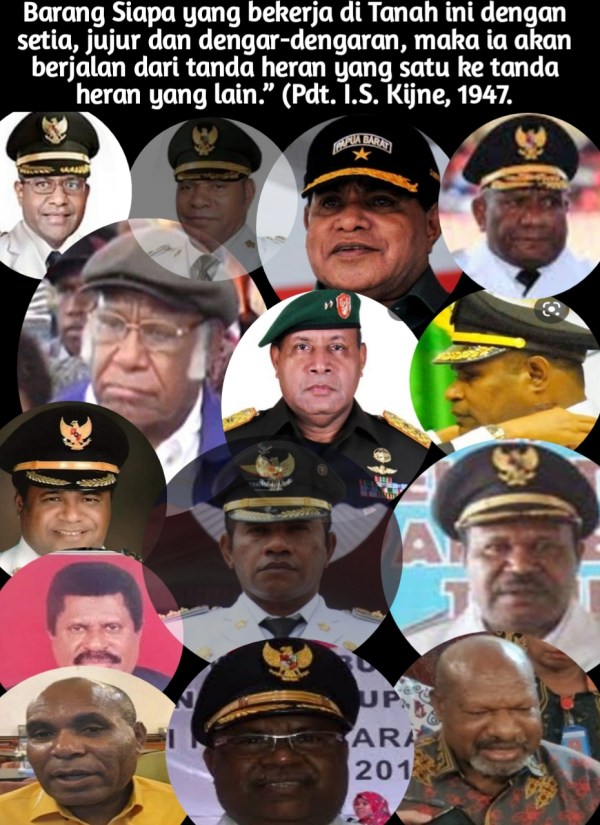
Daftar Pemimpin Orang Asli Papua yang neninggal dalam 4 tahun terakhir 2018-2021

Menyusul artikel kami sebelumnya: “Daftar Tokoh Orang Asli Papua yang neninggal dalam 4 tahun terakhir 2018-2021“, maka kami lanjutkan tambahan pemimpin atau tokoh OAP yang baru saja meninggal dunia.

Catatan kami adalah:

  • Mulai berpikir dan bertindak, agar setiap orang Papua yang sakit, masyarakat maupun pejabat, harus berpikir untuk berobat di Vanimo, Provinsi West Sepik/ Sandaun. Karena dari sisi biaya sangat murah, dari sisi waktu dan jarak sangat dekat, apalagi dari sisi pelayanan sangat bersahabat. Tempatnya sangat bersih.
  • Mulai belajar hidup sehat, meninggalkan kebiasaan-kebiasaan yang membawa kematian seperti mabuk-mabukan, persundalan, dan narkoba.
  • Mulai berdoa dan berpuasa banyak. Minta pengampunan dari Allah.

Pokok Doa Pengampunan

Kita mengaku di hadapan Tuhan sebagai bangsa yang telah lemanggar banyak janji dan perintah Tuhan, oleh karena itu kita secara pribadi dan sebagai bangsa Papua harus dan patut mengaku dosa berdoa, berlutut, berpuasa dan menyatakan penyesalan.

***

  1. 1984 – 04 – 26 . Arnold Ap (born July 1, 1946, in Numfor Island, Netherlands New Guinea  – died April 26, 1984, in Jayapura, Irian Jaya, Indonesia) was a West Papuan cultural leader, anthropologist and musician. Arnold was the leader of the group Mambesak, and curator of the Cenderawasih University Museum. He also broadcast Papuan culture on his weekly radio show.  <https://en.wikipedia.org/wiki/Arnold_Ap&gt;
  2. 1996 – 03 – 12. Dr Thomas Wainggai meninggal dunia karena diracuni makanan/ minuman di Penjara Kalisosok, Jakarta. <https://www.amnesty.org/en/documents/asa21/011/1996/en/&gt;
  3. 2016 – 12 – 7. Bupati Yalimo Er Dabi meninggal dunia saat menjalankan tugas, 7 Desember 2016 di Timika, akibat kematian tidak jelas
  4. 2018 – 01 – Bupati Keerom Celsius Watae dikabarkan tutup usia pada pukul 14.20 Rabu (10/ Januari 2018) di Rumah Sakit Polri Bhayangkara, Kotaraja, Kota Jayapura. Akibat serangan Jantung, beritanya dapat diakses di <https://www.papua.go.id/view-detail-berita-5275/gubernur-lukas-terkejut-bupati-keerom-meninggal-dunia.html&gt;
  5. 2018 – 01 – Thomas Tigi, Bupati Dogiyai Meninggal Dalam Tahanan di Jayapura Secara Tiba-tiba. 15 Januari 2018, di Rumah Sakit Abepura, Jayapura. Beritanya dapat dibaca di <http://www.nabire.net/mantan-bupati-dogiyai-2012-2015-drs-thomas-tigi-tutup-usia/&gt;
  6. 2018 – 02 – Herman Auwe Mantan Wakil Bupati Kabupaten Dogiyai, Beritanya diakses di sini <http://papuaposnabire.com/News/Read/4160-mantan-plt-bupati-dogiyai-herman-auwe-meninggal-dunia&gt;
  7. 2019 – Bupati Mamberamo Raya Periode 2011-2016, Demianus Kyeuw-Kyeuw SH, MH meninggal dunia pada hari Selasa (12/maret/2019), di Jayapura akibat “serangan jantung”
  8. 2019 – 03 – 18. Mantan Bupati Sorong selama dua periode (1997-2007), Dr. Jhon Piet meninggal hari Senin 18 Maret 2019, di sorong, akibat kematian tidak di ketahui.
  9. 2019 – 09 – 20. Mantan Gubernur Provinsi Papua Barat, Brigadir Jenderal Marinir Abraham Octavianus Atururi meninggal di Papua Barat, Jumat, 20 September 2019. Akibat meninggal sakit, tapi keterangan kematian tidak jelas.
  10. 2019 – 08 – 03. Uskup Timika, Papua, Mgr John Philip Saklil Pr meninggal dunia di Rumah Sakit Mitra Masyarakat Timika, Sabtu (3/8/2019). Baca selengkapnya di artikel “Uskup Timika John Saklil Meninggal Dunia di Rumah Sakit”, https://tirto.id/efzV
  11. 2020 – 08 – 23. Wakil Bupati Maybrat Paskalis Kocu meninggal dunia pukul 08.00 WIT di kediamannya di sorong, Selasa (25/8/2020). Akibat kematian terjatu tiba-tiba dan tidak sadarkan diri. <https://mediaindonesia.com/nusantara/339501/wakil-bupati-maybrat-meninggal-dunia&gt;
  12. 2020 – 01 – 13. Bupati kabupaten Boven Digoel, BenediktusTambonop, ditemukan meninggal dunia, Senin (13/01/2020 di salah satu hotel bintang lima kawasan Kemayoran, Jakarta Pusat, akibat kematian tidak diketahui dengan jelas.
  13. 2020 – 03 – 20. Paulus Demas Mandacan Bupati Manokwari (20/4/2020), beritanya dapat diakses di <https://www.kompas.tv/article/77305/profil-bupati-manokwari-demas-paulus-mandacan-yang-meninggal-diduga-serangan-jantung&gt;
  14. 2020 – 9 – 19. Demas Tokoro Ketua Pokja Adat MRP (19/9/2020).
  15. 2020 – 9 – 3. Mantan Bupati jayapura Habel Melkias Suwai meninggal dunia kamis 3 september 2020 di Jakarta, akibat “Serangan jantung”.
  16. 2020 – 10 – 15. Arkelaus Asso Mantan Wakil Bupati Yalimo (15/10/2020).
  17. 2020 – Bertus Kogoya Mantan Wakil Bupati Lani Jaya (11/9/2020). Beritanya dapat diakses di <https://www.lelemuku.id/2020/09/mantan-wakil-bupati-lanny-jaya-bertus.html&gt;
  18. 2020 – 11 – 14. Yairus Gwijangge Bupati Nduga, meninggal pada Minggu (14/11/2020) di jakarta. Akibat kematian karena sakit tapi tidak di jelaskan secara terperinci alias tidak jelas. <https://news.detik.com/berita/d-5256007/bupati-nduga-yairus-gwijangge-meninggal-dunia-karena-sakit&gt;
  19. 2020 – 12 – 14. Wakil Kepala Staf Angkatan Darat (Wakasad) Letjen TNI Herman Asaribab meninggal dunia pada hari Senin (14/12/2020) di Jakarta Pusat, akibat kematian Tidak Jelas. Berita dapat dibaca di <https://www.cnnindonesia.com/nasional/20201214145151-20-581895/wakasad-herman-asaribab-meninggal-dunia&gt;
  20. 2021 – 03 – Dr. Hengki Kayame, Mantan Bupati Kabupaten Paniai, Meninggal Bulan Maret 2021.
  21. 2021 – 04 – Robby Omaleng, Ketua DPRD Kabupaten Mimika Meninggal setelah Divaksinasi Pada Bulan April 2021. Berita diakses di <https://papua.inews.id/berita/ketua-dprd-mimika-meninggal-dunia-usai-reses-akibat-serangan-jantung&gt;
  22. 2021 – 05 – 21. Wakil Gubernur Klemen Tinal meninggal dunia di RS Abdi Waluyo Menteng, Jumat (21/5/2021) di Jakarta, akibat meninggal tidak jelas alias di duga dibunuh.
  23. 2021 – 05 – Repinus Telenggen, Mantan Bupati Kabupaten Puncak Meninggal Secara Tiba-tiba Pada Awal Bulan Mei 2021.
  24. 2021 – 06 – 20. Alex Hesegem, mantan Wakil Gubernur Papua periode 2006-2011, meninggal di RSUD Jayapura, Minggu (20/Juni/2021). akibat sakit penyakit, seperti pneumonia dan diabetes melitus.
  25. 2021 – 06 – Pendeta Yeremia Zanambani dibunuh oleh TNI pada September 2020. Berita dapat diakses di <https://www.cnnindonesia.com/nasional/20210714133720-20-667593/jejak-bambang-purwoko-bongkar-kasus-kematian-pendeta-di-papua&gt;
  26. 2021 – 07 – 23. Mantan Bupati Biak Numfor Yusuf Melianus Maryen,S.Sos. MM meninggal dunia, Jumat (23/7/2021) di Biak, akibat kematian Sakit tapi tidak di jelaskan secara terperinci. <https://rri.co.id/biak/info-publik/ruang-publik/1124224/yusuf-melianus-maryen-mantan-bupati-biak-numfor-dua-periode-meninggal-dunia-di-usia-65-tahun&gt;
  27. 2021 – 10 – Mantan Bupati Yahukimo, Abock Busup, karena sakit,” kata Ketua Umum PAN Zulkifli Hasan kepada wartawan, Minggu (3/10/2021), di Jakarta. Akibat kematian tidak jelas.

Sumber:

In Fact Indonesian Military Pilots Fly Civilian Airline in West Papua

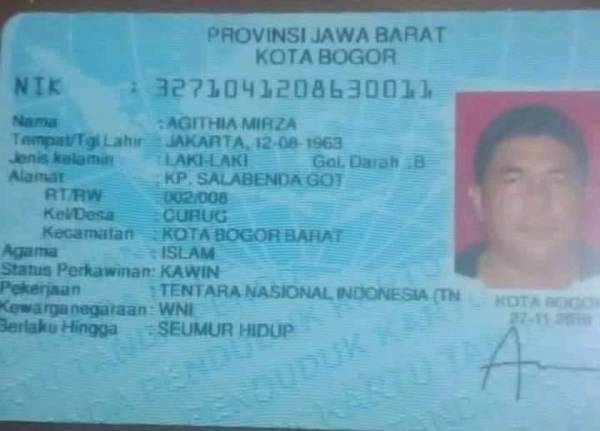
Kapten Pilot Pesawat Rimbun Air yang jatuh di Intan Jaya Papua pada 15 Sept 2021, Haji Mirza adalah anggota TNI aktif bernama Agithia Mirza. Hal ini terbukti dari KTP milik Korban. Pesawat sipil, dipiloti seorang anggota Militer Aktif. Itulah Papua.

Captain Pilot of Rimbun Air that fell down in Intan Jaya West Papua on 15 September 2021, Haji Mizra is a TNI Member named Agithia Mirza. This is proven with his Identity Card found by locals in the area.

Human Rights Emergency: Indonesian Terror on Peaceful Demonstration in West Papua

TODAY IN WEST PAPUA EMERGENCY
Please advocate. This message came from a student at Cendewasih University, Jayapura, West Papua.

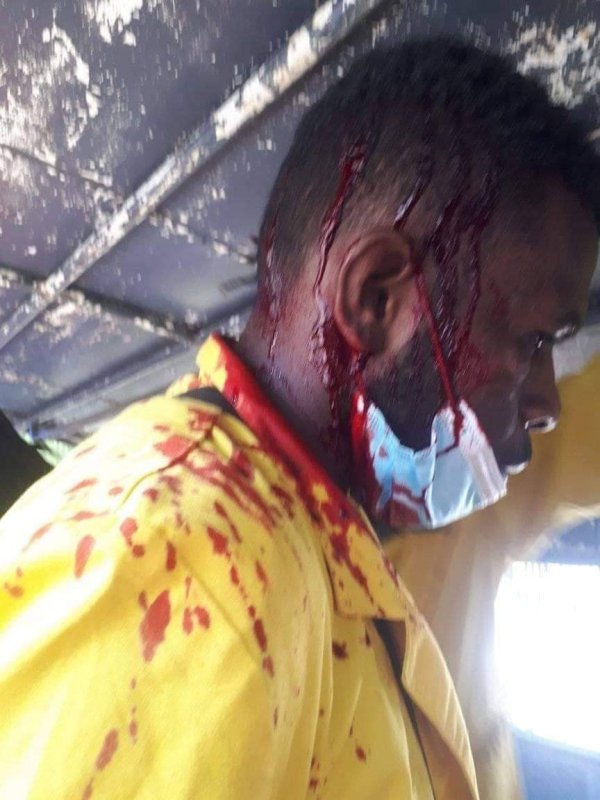
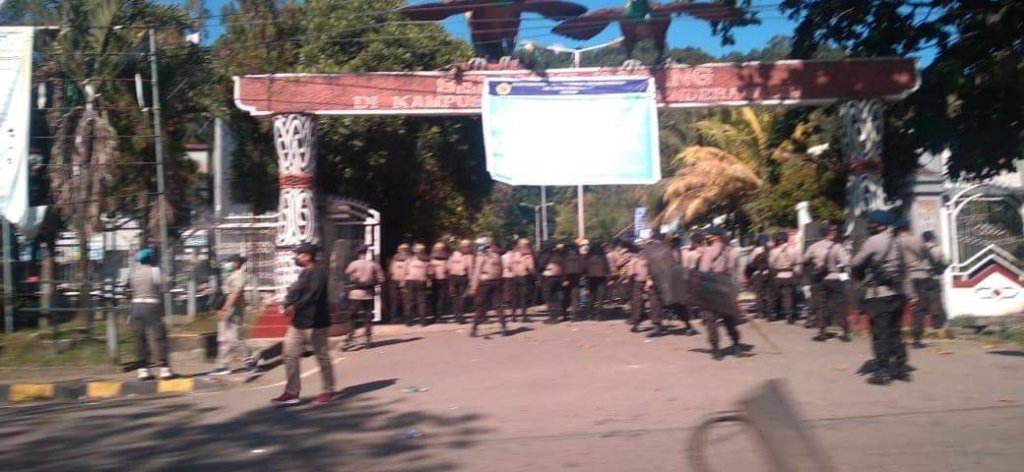
Some students were arrested at this time 09.00 Wit. At Gapura Uncen Abepura and below to the Jayapura Police. Several Students Arrested For Peaceful Demonstration Against Special Autonomy Volume II. Some of them had been beaten and were bleeding profusely.

Several students were arrested and forced to ride in Indonesian police cars. All the space for movement of students and the people of Papua continues to be silenced.
The Indonesian colonial government unilaterally without regard to the voices of the Papuan people will ratify Special Autonomy Volume 2.

Please advocate, help to monitor the situation in West Papua.

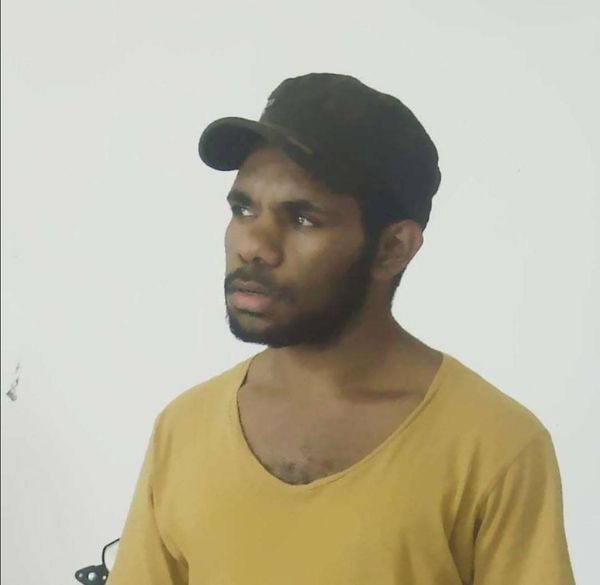
Breaking News! Erik Walela is Being Chased to be Arrested by Indonesian Army

On Tuesday 1 June 2021, about 7:30 AM, Free West Papua activiest and member of the United Liberation Movement for West Papua (ULMWP) has hunted by the Indonesian Army and Police (TNI/ Polri) in Post 7 Sentani, West Papua, however, he was not found in place.

Therefore reacted brutally and arrested two other family members of his and taken to Jayapura town,

Two arrested persons are Abi Walela (32) and 2. Anno Walela (31)

In arresting them, the police kicked open the doors and searched into the house with force, confiscated goods in the house, including 1 laptop, 4 flash drives, 2 flash disk, 3 mobile phones and 1 bag. They also confiscated some documents.

Last night they were still held by the police in Jayapura Town.

This information is updated in order to let all Melanesians know and all human beings to react upon massive and systematic human rights violations happening in our eyes in West Papua right now.

Original Malay Text

Pada hari ini Selasa, 1 Juni 2021 sekitar pukul 7.30 pagi tadi, seorang aktivis Papua Merdeka anggota ULMWP Erik Walela diburu oleh pasukan gabungan Tentara dan Polisi kolonial Indonesia (TNI/Polri) di Pos 7 Sentani — West Papua, namun tidak berhasil menangkapnya.

Polisi kemudian mengamuk dan menangkap dua orang anggota keluarganya dan mereka telah dibawa ke kantor Polda Papua di Kota Jayapura untuk diperiksa.

Mereka yang ditangkap adalah:1. Abi Walela (32)2. Anno Walela (31th)

Dalam penangkapan itu, Polisi Indonesia menggerebek sebuah rumah yang diduga tempat keberadaan Erik Walela dan telah mengoperasi rumah itu kemudian mengambil sejumlah barang dari dalam rumah tersebut. Barang yang diambil diantaranya:(1). Satu buah laptop(2). Empat buah memory—hardisk(3). Dua buah USB-flashdisk(4). Tiga buah handphone (HP)(5). Satu tas ransel (ada isi/berisi)(6). Dan sejumlah lembaran dokumen lainnya.

Hingga malam ini, mereka sedang ditahan di kantor Polisi. Demikian informasi sementara, jika ada update selanjutnya dan kronologis lain akan kami update lagi —

Mohon pantauan media dan advokasi..!!!!#ULMWP#WestPapua#FreeWestPapua#TNI#Polri#Sentani

Source: FB

Daftar Tokoh Orang Asli Papua yang neninggal dalam 4 tahun terakhir 2018-2021

Dari Tahun Ke Tahun Orang Asli Papua (OAP) Meninggal Dunia Tanpa Gejala Bahkan Meninggal Di Hotel Jakarta. Pemerintah Provinsi Papua Dan Tokoh-Tokoh Gereja Serta Tokoh Masyarakat Di 7 (Tujuh Wilayah Adat) Perlu Evaluasi Bersama Dalam Rangka Keselamatan Orang Asli Papua Di Masa Mendatang. Penelitian Ini Dibuktikan Dengan Beberapa Peristiwa Kematian Para Pemimpin Papua Di Tahun 2018 antara Tahun 2021. Kematian Semakin meningkat, Nama-Nama Para Pemimpin Tersebut Sebagai Berikut;

  1. Benediktus Tombonop Bupati Boven Digul (3/1/2020), Meninggal Di Hotel Jakarta Secara Tiba-tiba.
  2. Paulus Demas Mandacan Bupati Manokwari (20/4/2020).
  3. Paskalis Kocu Wakil Bupati Maybrat (25/8/2020).
  4. Habel Melkias Suwae Mantan Bupati Jayapura (03/9/2020).
  5. Bertus Kogoya Mantan Wakil Bupati Lani Jaya (11/9/2020).
  6. Demas Tokoro Ketua Pokja Adat MRP (19/9/2020).
  7. Arkelaus Asso Mantan Wakil Bupati Yalimo (15/10/2020).
  8. Yairus Gwijangge Bupati Ndugama (14/11/2020).
  9. Wakasad LetJend TNI Herman Asaribab 14/12/2020
  10. Dr. Hengki Kayame, Mantan Bupati Kabupaten Paniai, Meninggal Bulan Maret 2021.
  11. Robby Omaleng, Ketua DPRD Kabupaten Mimika Meninggal Setelah Divaksinasi Pada Bulan April 2021.
  12. Repinus Telenggen, Mantan Bupati Kabupaten Puncak Meninggal Secara Tiba-tiba Pada Awal Bulan Mei 2021.
  13. Klemen Tinal, Wakil Gubernur Provinsi Papua Meninggal 21 Mei 2021 Meninggal Serangan Jantung…
  14. Drs. Alimuddin Sabe, Mantan Wakil Bupati Sarmi (meninggal dgn serangan jantung).
  15. Sendius Wonda, SH, M.Si. Kepala Biro Pemerintahan Setda Provinsi Papua.
  16. Obaja Waker, Asisten I Kabupaten Puncak Papua.
  17. Celsius Watae, Bupati Keerom Meninggal di Hotel Secara Tiba-tiba.
  18. Wemban Kogoya, Kepala Dinas Kesehatan Kabipaten Tolikara.
  19. Abraham Oktavianus Aturure, Mantan Gubernur Provinsi Papua Barat.
  20. Rowani Wanimbo, Mantan Ketua DPRD Kabupaten Tolikara.
  21. Thomas Tigi, Bupati Dogiyai Meninggal Dalam Tahanan di Jayapura Secara Tiba-tiba.
  22. Herman Auwe Mantan Wakil Bupati Kabupaten Dogiyai.

Dalam Tiga Tahun Terakhir Ini, Hitung-hitung Puluhan Pemimpin Papua Telah Meninggal Dunia. Tidak Terhitung Kematian Bangsa Papua Yang Meninggal Karena Ditembak Oleh TNI/POLRI Diseluruh Pelosok Papua. Sampai Kapan Air Mata Akan Berakhir❓

Maka Satu Hal Yang Kami Sarankan Kepada Para Pemimpin Papua Yang Ada di 44 Kabupaten Kota Yang Berasal Dari Kedua Provinsi “Perlu Evaluasi” Bersama MRP, DPRP Serta Libatkan Pihak Gereja Dari Berbagai Denominasi Yang Ada Di Tanah Papua. Demi Keselamatan Bangsa Papua Di Tahun Mendatang. Karena Peristiwa Kematian Ini Terjadi Dengan Cara Misterius.

Selanjutnya, Kami Juga Sarankan Bahwa Para Pemimpin Atau “Orang Papua Yang Sakit” Janganlah Dibawah Ke Jakarta, Kalau Bisa Bawah saja Berobat Di Luar Negeri Seperti “Singapur atau di Negara Tetangga Lainnya” Karena Percuma Orang Papua Berobat Di Jakarta Malah Dibawah Jenazah Terus Pulangkan Di setiap Tahun. Merupakan Peristiwa Yang Sesungguhnya Terjadi Di Papua. Maka Sekali Lagi Kami Sampaikan Ini Sebagai Suatu Sarang Kami Bagi Para Pemimpin Papua Yang Kami Sayangi. Semoga Saran Dan Pesan Ini Bermanfaat Bagi Kita Semua.

Kiranya TUHAN Yesus Memberkati Kita Sekalian..

Sumber: WestPapuaNews

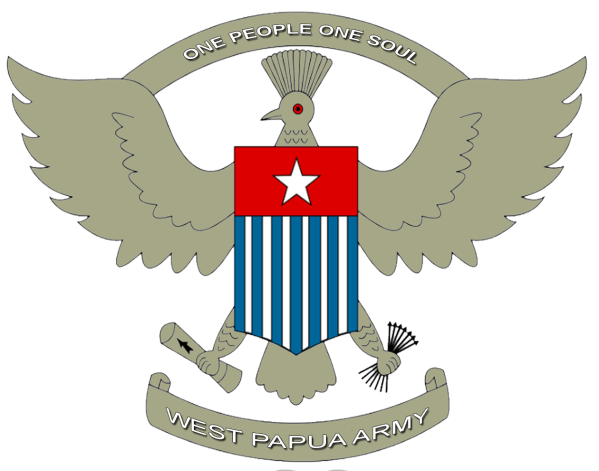
Gen. WPRA Amunggut Tabi: Semua Komando Wajib Bersatu di dalam WPA

Dari Markas Pusat Pertahanan, Kantor Sekretariat-Jenderal West Papua Army (WPA), Gen. Amunggut Tabi menyerukan kepada semua panglima Komando dan Komandan Gerilyawan Papua Merdeka dari Tentara Pembebasan Nasional Papua Barat (TPN PB), Tentara Nasional Papua Barat (TNPB) dan Tentara Revolusi West Papua (TRWP) untuk bersatu-padu membangun organisasi dan profesionalisme West Papua Army (WAP) di bawah Komando Panglima WPA Chief General Mathias Wenda.

Sebagai lembaga profesional yang telah berdiri dan bergerak berpuluh-puluh tahun, jauh sebelum kelahiran organisasi politik United Liberation Movement for West Papua (ULMWP) dan Pemerintahan Sementara West Papua, maka kami menghimbau kepada semua Komando agar mempesatukan diri dan menyusub barisan.

Dalam militer kita hanya mengenal komunikasi satu arah, yaitu dari Panglima ke bawahan, tanpa pertanyaan, tanpa ragu-ragu, apalagi tidak ada bantahan. Karena pertanyaan dan bantahakan adalah periaku politisi dan politikus, yang tidak terdapat di dalam DNA militer di manapun di seluruh dunia.

Selain itu sejak pengangkatan Panglima Komando WPA tanggal 1 Mei 2021, maka siapa saja dan di mana saja kita berada, yang merasa diri Tentara yang berjuang untuk Papua Merdeka wajib menyatukan barusan, dan melakukan persiapan-persiapan untuk mengikuti dan tunduk kepada perintah serta Disiplin Militer West Papua Army.

Selaku penanggungjawab administrasi organisasi militer Papua Merdeka, kami serukan kepada semua panglima Komando TPN PB, TNWP dan TRWP untuk

  1. Mendata dan melaporkan semua Struktur Komando
  2. Mendata dan melaporkan daftar nama Pasukan, lengkap dengan pangkat dan Batallion Registry Number (BRN);

Mengingat dengan segera perlu dilakukan penyesuaian dalam rangka percepatan Pembentukan Badan Pertahanan dan Keamanan Pemerintahan Sementara West Papua, sebagai pelaksanaan mandat Undang-Undan Dasar (UUD) ULMWP 2020 yang telah ditindak-lanjuti dengan Instruksi Presiden Nomor 1/2021 tentang Percepatan Pembentukan Badan Pertahanan dan Keamanan.

Segala-sesuatu terkait dengan West Papua Army dapat dikomunikasikan ke Sekretariat-Jenderal WPA di army@westpapua.army

Dikeluarkan di: Markas Pusat Pertahanan
pada tanggal: 13 Mei 2021

Sekretaris-Jenderal,

Amunggut Tabi, Gen. WPA
BRN: A.DF 018676

Former TNI Commander: Don’t brand West Papuan resistance OPM ‘terrorist’, say ex-general, critics

General Gatot Nurmantyo, a former commander in the Indonesian National Armed Forces, giving his television interview – in Bahasa Indonesian. Video: TV-One Indonesia

Asia Pacific Report correspondent

A former Indonesian military commander has condemned the formal labelling of the West Papuan resistance TPN/OPN as “terrorists”, saying that the Papuan problem was complex and could not be solved by armed force alone.

Among other critics of the tagging are the Papua provincial Governor, Lukas Enembe and a Papuan legal researcher.

General Gatot Nurmantyo, former commander of the Indonesian National Armed Forces (TNI), said during a live interview on TV-One Indonesia that it was wrong to label the TPN/OPM (National Liberation Army/Free Papua Movement) as a terrorist group.

He said that Jakarta had tried to use a military solution since the former Dutch colony of Irian Jaya was “integrated” into Indonesia in 1969 without bringing about any change.

“Papua cannot be solved by military operations,” he said.

General Nurmantyo said military operations would not solve the root cause of the conflict in Papua.

He regretted the decision made by President Joko “Jokowi” Widodo’s administration on May 5.

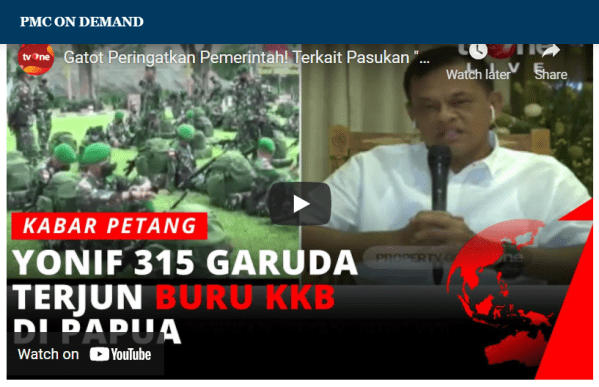
“I am saddened to hear that troops are leaving for Papua to fight. It’s a picture that I think makes me sad,” said the general.

Sad for two reasons

He said he felt sad for two reasons:

First, Papua was one of the Indonesian provinces and the youngest province of the Unitary State of the Republic.
Second, based on Government Regulation in Lieu of Acts (PERPU) 59 of 1959, Papua was still under civilian rule. So, the military actions should be mainly territorial, which supported by intelligence and prepared combat operations.
The retired general said that Papuans “are our own people”, so the burden could not be imposed only on the military and police. Executive government and other government agencies should comprehend the real background of the movements and be involved to resolve the prolonged problem in Papua.

“Territorial operations are operations to win the hearts and minds of the people, because what we face is our own people. Do not expect to solve a condition in Papua only with military operations,” said General Nurmantyo.

“I remind you, it will not work, no matter how great it will be. Because the problem is not just that small,” he said.

General Nurmantyo, who has been a former military district commander in Jayapura and Merauke said that Indonesia already had experience in Aceh where the conflict had not been resolved by military operations.

As the PERPU 59 of 1959 was still valid, the governor was the single highest authority. The military was not allowed to carry out operations without coordinating with the local government.

Communication with government

General Nurmantyo said communication with the local government was carried out and measured operations launched.

“Lest the people become victims! How come, in a situation like this we are waging an open war? Seriously!

“Meanwhile, the situation is still very civil. The leader is the governor or local government.

“This is a state regulation. This is different from when Papua would be designated as a military operation,” said General Nurmantyo.

According to a media release received by Asia Pacific Report. Papua Governor Lukas Enembe and the provincial government also objected to the terrorist label given to the KKB (“armed criminal group”), as the Indonesian state refers to the TPNPB (West Papua National Liberation Army).

Key points
Two of the seven points made in the media release said:

“Terrorism is a concept that has always been debated in legal and political spheres, thus the designation of the KKB as a terrorist group needs to be reviewed carefully and ensure the objectivity of the state in granting this status, and
“The Papua provincial government pleaded with the central government and the Indonesian Parliament to conduct a re-assessment of the observation of the labeling of KKB as terrorist. We are of the opinion that the assessment must be comprehensive by taking into account the social, economic and legal impacts on Papuans in general.”
A West Papuan legal researcher, who declined to be named, said that the Indonesian government misused the term “terrorism” to undermine the basic human rights of indigenous West Papuans.

So far, the term terrorism had no precise definition and so has no legal definition, said the researcher.

Many of the United Nations member states did not support UN resolution 3034 (XXVII) because it contained a certain degree of disconnection to other international instruments, particularly human rights laws.

Disagreements among the states remained regarding the use of terrorism, especially the exclusion of different categories of terrorism.

Right to self-determination

In particular the exception of the liberation movement groups. Particularly contentious which was the affirmation in 1972 of “the inalienable right to self-determination and independence of all peoples under colonial and racist regimes and other forms of alien domination”.

“The legitimacy of their struggle, in particular, the struggle of national liberation movements by the principles and purposes is represented in the UN charter. Therefore, designating West Papua Liberation Army as a terrorist group by the Indonesian government considered outside the category of the terrorist act,” said the researcher.

“Any definition of terrorism must also, accommodate reasonable claims to political implications, particularly against repressive regimes such as Indonesia towards West Papuans.

“The act of self-determination by Papuans cannot be considered terrorism at all.”

The international community should condemn any regime that is repressive and terrorist acts by colonial, racist and alien regimes in denying peoples their legitimate right to self-determination, independence, and other human rights.

A coherent legal definition of terrorism might help “confine the unilateral misuse” of the term by the national government such as Indonesia against TPNPB/OPM, said the researcher.

The other side of the story was war crimes, crimes against humanity, genocide, oppression, torture and intimidation by the state.

These elements were present in West Papua and they qualified as the act of terrorists and were therefore universally recognised as crimes against humanity and criminals, the researcher said.

The researcher added: “The West Papua army or TPN/OPM are not terrorist groups. They are the victims of terrorism”

This report and the translations have been compiled by an Asia Pacific Report correspondent.

Source: https://asiapacificreport.nz

West Papua’s Armed Struggle For Independence – A Historic Shift?

International media poses the inevitable question. The new drama prompts answers to Melanesia’s biggest nightmare.

And, Papua New Guinea may be dragged into the decades – old ‘ low – level insurgency’ fought across the border both overtly, and covertly.

Total warfare seems “imminent” in West Papua. Follow the conversation that escalated in recent months. Here: https://m.youtube.com/watch?v=edh5aYGqMbA&feature=youtu.be

Key points:

(1) Shortly after the announcement of the formation of a provisional and clandestine government in West Papua, Indonesia intensified its military operations in western New Guinea—in the darkness of prolonged internet blackouts.

(2) At the same time, volunteers from neighboring Papua New Guinea join West Papua’s armed struggle for independence in a historic announcement.

(3) Papua New Guinea is politically neutral in the conflict—but the volunteers’ announcement forces the central government in Port Moresby to confront Indonesia and its own stance on the West Papua issue.

The international media reported on the latest developments.

Total warfare “imminent” in West Papua – PNG dragged into the conflict

https://tidningenglobal.se/…/total-warfare-imminent-in…/

By Klas Lundström

On 6 May, a battalion consisting of volunteers from Sepik Province, Papua New Guinea, announced they will join the armed struggle for an independent West Papua.

It’s the first time Papuans from both sides of New Guinea’s vertical border join forces to confront Indonesia’s 60-year-old annexation of the western half of the island.

“On behalf of the citizens of Papua New Guinea, we are now standing here to declare ourselves that we are ready to go and fight against Indonesian soldiers for helping our people of West Papua,” a spokesperson for the Sepik battalion says in their announcement video.

PNG dragged into the conflict

In late April, the central Indonesian government led by President Joko Widodo officially declared that they consider every armed separatist movement in West Papua a “terrorist organization”—an announcement that occurred in the wake of heavy fighting between the Indonesian army and the West Papuan independence movement “Organisasi Papua Merdeka” (“The movement for a free West Papua”), OPM.

During the clash, Indonesian brigadier general Danny Karya Nugraha was killed, prompting President Widodo to declare swift and large-scale military retaliations. A development that has led volunteers from neighboring Papua New Guinea, PNG, to act.

“Our government [in Port Moresby] does not have an initiative to support our people of West Papua, therefore we the people of Sepik, are ready to go and support,” the spokesperson for the Sepik battalion says.

The historic announcement of volunteers joining the armed conflict for an independent West Papua pushes the boundaries for the conflict and puts PNG’s central government on the spot. Its continuing good relationship to its counterpart in Jakarta is of great concern, but even more important is to nurture PNG’s relationship to its southern neighbor Australia—who’s come to  the rescue amidst the Port Moresby government’s shortcomings in its dealing with the ongoing Covid-19 pandemic—and who officially “respects” Indonesia’s annexation of West Papua.

“The Indonesian government call them [OPM] terrorists, but they are not the terrorists—they are fighting for their land. Indonesia—you are the thief,” the Sepik battalion spokesperson says.

The voluntary battalion’s entry into the conflict now forces the central government in Port Moresby to make a political stand in the West Papua issue.

“Total warfare” imminent

Benny Wenda, West Papuan provisional President based in London, says West Papua hasn’t been so close to total warfare since the 1970s.

“The level of military operations we now see is a return to the Suharto era in the 1970s,” he tells Global Magazine.

When Benny Wenda was young, he endured Indonesia’s military raids and operations, and witnessed them firsthand. Then, Indonesian dictator Suharto enforced gross human rights violations in West Papua—e.g., in the form of using Napalm and chemical weapons and documented massacres—in the central highlands, where people are still traumatized by the chocking events.

Indonesia then tried to quell the widespread desire for West Papuan independence, but the resistance has survived and today it’s the second generation of independence fighters, born under Indonesian occupation and raised during a time of encouraged “transmigration,” in hopes of turning West Papuans into a minority on their own turf. The second generation now continues their parents’ war on Jakarta and its discharge of natural resources, most visible at the Freeport Mine, earlier known as Grasberg.

“Indonesia shuts down the internet”

Indonesia is currently deploying more troops to the military “hotspots” of the central highlands, something that’s been done in the protection of a prolonged internet blackout—which has kept telephones, social media, and information channels silent for days in the most vulnerable regions of West Papua.

The internet blackout occurred as Benny Wenda announced the formation of the historic provisional government, whose department secretaries remain anonymous as they operate inside West Papua “to undermine Indonesian rule.”

“The internet is being cut off, hundreds more troops are being deployed, and we are receiving reports that West Papuan civilians are fleeing from their villages in Intan Jaya, Puncak Jaya, and Nduga regencies,” Benny Wenda writes in a statement on 4 May.

Internet blackouts – a political tool

It’s not the first time that internet is cut and blocked in West Papua. In August and September 2019, all digital doors to West Papua were slammed shut amidst political unrest, which resulted in killings of civilians by Indonesian army and police forces.

In June, the Jakarta State Administrative Court, PTUN, ruled Indonesia’s actions as “unlawful” and a violation of the 1959 State Emergency Law to impose the internet blackout to, officially, halt the spreading of “fake news” per social media. The court ruling was historic and a testimony to the measures the Indonesian state apparatus is prepared to take, in violation of its own enacted laws, to quell dissatisfaction and exchange of information among West Papuan residents.

The current internet blackout bares no political motives, per telecom and communications service provider PT Telkom Indonesia, per Radio New Zealand’s reporting on 3 May.

A solution to the blackout in large parts of the central highlands is yet, on 6 May, to be found.

Aceh might join forced against “alleged genocide”

The armed West Papuan independence struggle might soon—in addition to volunteers from neighboring Papua New Guinea—also see recruits from Indonesian Aceh province, per sources to Global Magazine.

Aceh, the northern part of Sumatra on the Western side of the Indonesian archipelago, long waged its own independence struggle against the central government in Jakarta ever since the formation of the Indonesian Republic in the 1940s. A bloody war that resulted in a peace agreement in 2005 and increased autonomy for Aceh.

This information—although at this stage only rumors—pushes the conflict of West Papua into a new stage, on the battlefield in the central highlands as well as inside political corridors. The question is how long the outside world can continue to ignore Indonesia’s military development, West Papua’s 40,000-odd internally displaced citizens and the recurring usage of internet blackouts as a tool to halt witness accounts from the conflict’s “hotspots” in the central highlands to reach the outside world.

“The Indonesian state is conducting a program of genocide against the West Papuan people. A bloody conflict that the US, Europe and the rest of the world community must intervene to stop,” Sebby Sambon, spokesperson for the OPM, tell Global Magazine.

….ends.

Papua New Guinea’s diplomacy on West Papua issue embraces international best – practice. The involvement of UN General Assembly is expected through art and craft of diplomacy to revisit the UN resolution on 1969 Act of Free Choice in which it ‘noted’ the outcome of the UN – supervised referendum on the political status of West Papua in the international system.

At the79th ACP group of countries leaders summit held in Nairobi, Kenya, PNG acceded to the unanimous resolution in which former colonized countries in Africa, Carribbean, and Pacufic agreed to support the option for West Papua to be reinstated on the list of UN Committee of 24.

West Papua was on the list but following Indonesian invasion of the former Dutch colony in 1962 it was removed. In the aftermath, the occupation industry run by Indonesian authorities and its military took over control from the Dutch.

And, for 55 years Indonesia gave the impression to the international community that the  independence struggle was a ‘ security issue’ for Indonesia and not an international issue with a colonial context.

The historic shift was inevitable.

PNG authorities scrambled to find an explanation to the drama. Read, here:https://www.facebook.com/groups/535647680132006/permalink/1520854274944670/

More report from PNG media is here:https://www.facebook.com/765439466917271/posts/3783814881746366/

For decades the freedom struggle suffered for want of internationalisation of the West Papua issue, which reached new heights in recent years with the independence struggle united under one umbrella called United Liberation Movement of West Papua or ULMWP.

(Photo caption: Indonesia’s ‘secret war’ in Australian neighbourhood, right on its doorstep, sees a historical shift from ‘ low – level insurgency’ for independence into total war with implications for West Papua proxy state of independent PNG; West Papua – since 1960s, its status as a UN Non – Self Governing Trust Territory has become a thorn for UN General Assembly and that ‘pebble in Jakarta’s shoes’; UN’s Dream or Pet Project in 1960s – West Papua was the last bastion of the free world, 55 years on today in 21st Century the former Dutch colony is qualified to be free having met the bar or measurement to put its case for self – rule to the international community including MSG and PIF through United Liberation Movement for West Papua or ULMWP)

Press Release: West Papuan Provisional Government forms cabinet and departments in blow to Indonesian rule

The Provisional Government of West Papua has announced the formation of a full cabinet commanding 12 government departments throughout the country. The newly-created departments, ranging from Green State Policy to Defense, deepen the challenge to Indonesia’s illegal occupation of West Papua.

After announcing the formation of the Provisional Government on December 1, 2020, the United Liberation Movement for West Papua (ULMWP) has been building up governance capacities inside the colonised territory. The latest move comes after President Jokowi ordered a ‘crackdown’ in West Papua in response to the killing of an Indonesian intelligence chief.

A number of prominent West Papuans inside the country have been appointed to the cabinet, led by Interim President Benny Wenda and the Interim Prime Minister. The ministers will cover the following portfolios:

  • Department of Foreign Affairs
  • Department of Environment and Green State Policy
  • Department of Home Affairs
  • Department of Rights of All Beings and Justice
  • Department of Political Affairs
  • Department of Indonesia Affairs
  • Department of Melanesia Affairs
  • Department of Women Affairs
  • Department of Social and Cultural Affairs
  • Department of Police
  • Department of Defense
  • Department of Finance

Due to the intense political repression of the Indonesian regime, the names of the cabinet ministers are not being released. The departments are working underground in West Papua to undermine Indonesian rule from the inside. The Department of Foreign Affairs will command the ULMWP’s network of diplomatic missions across the world, including the EU, UK, US and Pacific.

The Department of Defense will command the united West Papua Army. The military commanders will include:

  • Supreme Commander Chief General Mathias Wenda
  • Deputy Supreme Commander General Goliat Tabuni
  • Chief of Staff Colonel Amos Sorondany
  • First Deputy Chief of Staff General Titus Murib
  • Second Deputy Chief of Staff General Brigen Fredinand Warobay
  • Third Deputy Chief of Staff General Abubakarak Omawi Wenda
  • Fourth Deputy Chief of Staff Mayor General Terianus Satto

The commanders today announce their commitment to operating within international humanitarian law and the laws of armed conflict, and their support for a peaceful approach to resolving the conflict.

The announcement comes on May 1, the anniversary of the Indonesian invasion of West Papua in 1963, commemorated annually by the West Papuan people.

Interim President Wenda said: ‘On the 58th anniversary of the illegal Indonesian invasion of our country, we take another step towards reclaiming our homeland. We are forming the world’s first Green State, able to protect the rights and life of all beings in place of an Indonesian occupation that has murdered hundreds of thousands of my people. Human rights and climate justice will be at the heart of our Provisional Government.’

Find full statement by Interim President Wenda on the announcement here.

Source: ULMWP

Blog at WordPress.com.

Up ↑

Design a site like this with WordPress.com
Get started