4.30 pm
I beg to move,
That this House has considered human rights in West Papua.
It is an honour to serve under your chairmanship, Mr Hollobone. I am delighted to have been granted this extremely important debate about human rights in West Papua. As I understand it, this is the first ever debate in the House of Commons on this topic. I am pleased to welcome colleagues from across the House who have come to support the debate, and I am grateful to them.
There have been a couple of brief debates in the other place over the years, but this is the first time that we, as elected representatives, have debated West Papua, despite having held some 3,455 debates in the last 50 years on issues great and small, of national and local significance. That is illustrative of the lack of attention this issue has received, when it ought to have had attention both at home and from the international community. I hope that today, in our small way, we can start to shine a light on the West Papuan cause and to give a voice to the people of West Papua.
I referenced the last 50 years, and there is a significance to that, as 2019 marks the 50th anniversary of the so-called Act of Free Choice. That Act is a defining moment in the West Papuan story and forms the context within which the current situation in West Papua must be viewed. I will set out some of that context and give a brief history of West Papua, before discussing the current situation. I will conclude with two key actions I suggest the UK Government consider taking to help improve the human rights situation in West Papua.
I thank my hon. Friend for giving way before he starts on his historical exposé. I want to set the current situation in context, as he is coming on to describe it. Is he aware of two human rights situations? The first was illustrated in a video that went viral, which showed a West Papuan freedom fighter being tortured with a snake by the Indonesian army. Is he also aware that, as a result of Indonesian activities in Nduga, 30,000 refugees have been created in just that area?
I am grateful to my hon. Friend for that intervention. I am aware of both the fact and the incident; they illustrate, in microcosm, the importance of this debate and are vivid examples of what is happening this very day in West Papua.
West Papua is the western half of New Guinea, which is the second largest island on earth and one of many thousands of south Pacific islands that are collectively known as Melanesia. Papuan people have inhabited the West Papua region for over 40,000 years. It was slowly drawn into the Dutch sphere of influence, and by the end of the 19th century the Dutch had established permanent administrative centres in the region as part of the Dutch East Indies.
When Indonesian nationalists declared independence from the Dutch empire in 1945, they included West Papua in the list of territories that would form the newly born country. That declaration sparked a four-year-long war between the Indonesians and the Dutch, which ended in 1949, when Indonesia was granted international recognition as an independent state at The Hague roundtable conference. However, this only heightened the divisions that existed on the status of the West Papua region. Indonesia argued that the region should be included in its new independent state, but the Dutch refused to cede the territory. At this point, I ought to mention that the West Papua region is home to the largest gold mine and the second largest copper mine in the world.
No compromise was found in the years that followed Indonesian independence, leading to a further fraying of tensions between Indonesia and the Netherlands. That led to Indonesia building up its military capacity, largely from weapons acquired from the Soviet Union. In the conflict that ensued, the United States, although originally supportive of the Dutch cause, eventually changed its position to ensure that Indonesia would not be driven towards the Soviet Union, in the context of the cold war.
Talks between Indonesia and the Netherlands followed in 1962, with the UN acting as the official mediating power. This resulted in the signing of the New York agreement, according to which the administration of West Papua would be assigned to the United Nations for a minimum of seven months, before being passed to Indonesia. Crucially, article 18 of that agreement stipulated:
“Indonesia will make arrangements, with the assistance and participation of the United Nations Representative and his staff, to give the people of the territory the opportunity to exercise freedom of choice.”
It went on:
“Such arrangements will include…formulations of the questions in such a way as to permit the inhabitants to decide (a) whether they wish to remain with Indonesia; or (b) whether they wish to sever their ties with Indonesia.”
Article 18 also noted that the consultation had to ensure the
“eligibility of all adults, male and female, not foreign nationals to participate in the act of self-determination to be carried out in accordance with international practice.”
I thank the hon. Member for securing this important debate. I have long held an interest in West Papua, going back 15 or 16 years into my previous life. Is not the root issue self-determination, which is an international human right? Having an ethical foreign policy that protects that vital human right is important for any Government, including the British Government.
Self-determination is a fundamental human right. That has been the case for many hundreds of years, as most famously enunciated at the beginning of the 20th century, after the first world war. It is a guiding principle in foreign policy for all countries, but particularly for the United Kingdom since that time. Self-determination is at the heart of the issue we are discussing, and I am grateful to the hon. Gentleman for making that point.
It is difficult to say that what happened in 1969—the so-called Act of Free Choice—was carried out in accordance with international practice or captured the true democratic will of the West Papuan people. Despite the New York agreement explicitly requiring Indonesia to
“guarantee fully the rights, including the rights of free speech, free movement and of assembly, of the inhabitants of the area”,
that guarantee was not fulfilled, because Papuan political parties were banned at the time of the Act of Free Choice.
A one person, one vote system, which is international practice, was not granted. Instead 1,025 representatives were selected by the Indonesian military to vote on behalf of the Papuan people. The representatives voted unanimously in favour of Papua becoming part of Indonesia. However, numerous reports from foreign observers and Papuans suggest that it was not a free consultation. It is claimed that those who were selected for the vote were blackmailed into voting against independence by means of threats of violence against their person and their families. Representatives were taken away from their families and communities for several weeks before the consultation.
Diplomatic cables from the US ambassador to Indonesia reported at the time that the Act of Free Choice in West Papua
“is unfolding like a Greek tragedy, the conclusion preordained.”
The ambassador went on to say that the Indonesians
“cannot and will not permit any resolution other than continued inclusion”
of West Papua
“in Indonesia. Dissident activity is likely to increase as the climax is reached but the Indonesian armed forces will be able to contain it and, if necessary, suppress it.”
The ambassador continued by saying that the Indonesian armed forces had “no intention of allowing” West Papuan choice
“other than incorporation into Indonesia. Separation is unthinkable.”
British diplomats in the region took similar views and drew similar conclusions at the time.
In a House of Lords debate in 2004, the then Foreign Office Minister, Baroness Symons, made this admission in responding to the then Bishop of Oxford:
“He is right to say that there were 1,000 handpicked representatives and that they were largely coerced into declaring for inclusion in Indonesia.”—[Official Report, House of Lords, 13 December 2004; Vol. 667, c. 1084.]
I would be interested to hear in due course from the Minister whether that is still the position of the UK Government, although I see no reason for it to have changed at this stage.
After making that admission, Baroness Symons went on to say that these things had occurred many decades ago and that, rather than dwelling on the past, it was important to look to the future and improve matters in the here and now. While I have some sympathy with that sentiment, it does perhaps miss the key point—that in the eyes of many West Papuans, the fundamental questions about the legitimacy of the so-called Act of Free Choice undermine the very legitimacy of Indonesian rule in West Papua.
We are now in the 50th anniversary year of the Act of Free Choice, which is understandably seen as an act of great injustice by the people of West Papua, who refer to it ironically as the “Act of No Choice”. In the past 50 years, the West Papuan people have been subjected to serious human rights violations, which have only fuelled and heightened that sense of injustice. Those human rights violations include the repression of free speech and peaceful assembly, impediments to a free press, arbitrary arrest, and even cases of torture and killings, as we have heard.
The human rights abuses in West Papua are in large part down to the fact that the region is de facto controlled by the Indonesian military. The University of Sydney has estimated that around 15,000 troops are currently deployed in the region. When human rights violations occur, there are inadequate systems of redress for Papuans, so violations often go unpunished. An Amnesty International report on West Papua noted that there is a lack of effort to investigate accusations of human rights violations and to try before civilian courts police officials accused of violations. Furthermore, it noted that allegations of human rights abuses committed by the military in West Papua often go unchecked or are dealt with before military tribunals with no transparency, leaving many victims of human rights violations awaiting justice.
We will all be aware of the case from earlier this year, which we heard about from my hon. Friend the Member for Henley (John Howell). Footage emerged of Indonesian police interrogating a young Papuan boy, who was on the floor and in handcuffs while officers wrapped a large snake around him. The child was alleged to have stolen a mobile phone. In the video, he is heard screaming in fear as officers laugh and push the snake’s head towards his face. In responding to the incident, a UN panel of human rights experts stated that it
“reflects a widespread pattern of violence, alleged arbitrary arrests and detention as well as methods amounting to torture used by the Indonesian police and military in Papua”.
They went on to explain that those tactics are often used against indigenous Papuans and that the incident is “symptomatic” of the discrimination West Papuans face from the Indonesian authorities.
Papuans are regularly arrested for peacefully expressing their opinions on the political status of West Papua, including through peaceful demonstrations or attending meetings in which the matter is discussed. The simple act of raising the symbol of West Papuan independence, the Morning Star flag, carries a prison sentence of up to 15 years. Pro-independence political leaders have routinely faced persecution and even assassination at the hands of the Indonesian authorities.
At this point, I would like to introduce someone who, I am pleased to say, is in attendance today—Benny Wenda, leader of the United Liberation Movement for West Papua, who came to see me recently, along with my constituent Richard Samuelson, who was the first person to bring the situation in West Papua to my attention, and his fiancée Elaine, who are also in attendance. I thank them.
I pay tribute to Richard for bringing this issue to my attention; without going off on too much of a tangent, it shows one of the greatest things about our parliamentary system. Many of us, when we raise issues in the House, do so because they are brought to our attention by constituents in our surgeries, and this is one such case. Richard and Benny made a powerful, moving case to me, and I am only too pleased to raise this issue before Parliament today.
I make that point during this debate as a reminder of the democratic rights and freedoms we enjoy in this country. Richard and Benny could come to see me and make their point freely, knowing they would not be persecuted and that their representative could and would take up the matter on their behalf. Those are rights and freedoms that, sadly, are not enjoyed by too many people around the world.
Benny’s story would bring a tear to the stoniest eye. Benny’s father was, in fact, one of the representatives hand-picked in 1969 to vote in the Act of Free Choice. Benny says that he still remembers his father telling him how he had been threatened and told that he and his whole family would be killed if he voted for Papuan independence.
During our meeting, Benny told me the tragic story, which he says is permanently fixed in his memory, of when, at just three years old, he saw many of his fellow villagers, including most of his family, killed during an Indonesian military operation. Years later, Benny became the leader of the Papuan student independence movement. After being imprisoned, he was able to escape to Oxford, where he was duly granted political asylum by the United Kingdom.
When I met Benny, he expressed with great emotion the gratitude he felt to the United Kingdom, and he spoke with admiration of our values of freedom and the rule of law—principles he said he was determined to see his people in West Papua enjoy. Benny was the one who, earlier this year, presented a petition to the United Nations calling for an independence referendum in West Papua. The petition contained the signatures and thumbprints of some 1.8 million West Papuans, which represents approximately 70% of the entire population.
I turn now to the Minister. What can the UK Government do? I have explained the history and set out the present situation. The question is, what can we do to ensure that the human rights situation improves in West Papua and that the future is brighter for the Papuan people? I accept that the United Kingdom’s power is limited, but I think there are two key areas where we could—and should—apply diplomatic pressure.
We should not downplay our influence. The United Kingdom is a close and important friend of Indonesia. A recent BBC poll found that over 65% of Indonesians take a positive view of the UK’s influence, making Indonesia the country with the second most favourable perception of the United Kingdom in Asia. Therefore, we have a role to play in having these conversations with our Indonesian friends, difficult though they may be.
The first thing I ask the Minister to consider doing is to push for the Office of the UN High Commissioner for Human Rights to visit West Papua. That should not be controversial; indeed, in a February 2018 meeting with the then UN High Commissioner, Zeid Ra’ad Al Hussein, Indonesian President Jokowi invited his office to visit West Papua. Sadly, some 15 months on, that visit has not taken place, and the former UN High Commissioner expressed concern about that in his update to the 38th session of the Human Rights Council.
The Foreign Office, and our representatives in the United Nations, should encourage their Indonesian counterparts to honour that invitation and permit the Office of the UN High Commissioner for Human Rights to visit West Papua. The UN High Commissioner’s assessment of human rights in West Papua will be critical to informing the world of the situation on the ground and bringing about positive change in the region. I ask the Minister today if he would please commit to raising the issue of this invitation with his Indonesian counterpart and encouraging them to honour it.
The second area where I would suggest the United Kingdom could have a positive influence is in pushing for increased press freedom in West Papua and particularly for greater access for foreign journalists to the region. At present, foreign journalists are essentially banned from West Papua. The few who are granted access are closely monitored by the Indonesian military and by no means allowed to report freely. The BBC’s Indonesia editor, Rebecca Henschke, was granted a special permit to report on a malnutrition crisis in the region last year but was expelled shortly after arriving after posting tweets that “hurt the feelings” of soldiers.
It is therefore unsurprising that Indonesia ranks 124th out of 180 countries in the 2019 World Press Freedom Index of the press freedom charity Reporters Without Borders. The charity concludes that President Jokowi did not keep his campaign promise to address media freedom in West Papua, with his presidency instead seeing drastic restrictions on access for foreign journalists and growing violence against local journalists who seek to report abuses by the Indonesian military.
A free press nurtures free societies. Now, more than ever, we must defend it. That was the message of the Foreign and Commonwealth Office last week as we marked World Press Freedom Day. Never has that been more true than in the case of West Papua. We simply must ensure that journalists are able to report freely in the region, shining a light on wrongdoings when they occur, and generally scrutinising the actions of the authorities in West Papua. Ensuring that that happens will go a long way towards helping to protect the human rights of the West Papuan people.
The UK is in an ideal position to take action on this issue. Last month, the UK Government announced that Amal Clooney had been made a special envoy on media freedom by the FCO and would head up a panel of legal experts looking to repeal anti-press freedom laws abroad and ensure that journalists across the world are free to report the truth. I therefore urge the Minister and the Foreign Secretary to ensure that this important panel, when it is established, investigates the situation in West Papua as a top priority. The panel, which is a wonderful initiative, can look at the restrictive laws that the Indonesian Government have put in place in West Papua, which have essentially created a media blackout in the region, and press the Indonesian Government to repeal them, enabling a free press, transparency and accountability in West Papua.
The simple fact is that the human rights situation in West Papua cannot improve until President Jokowi delivers on his promise to allow greater press freedom in the region, which has thus far failed to happen. The panel therefore represents a golden opportunity to hold the Indonesian Government to their promises, ensuring that their warm words turn into hard action. Ultimately, a free media can prevail in West Papua, and I therefore hope that the Minister will assure me that he will make strong representations to the Foreign Secretary and Amal Clooney that West Papua must be an area of focus for the Defend Media Freedom panel.
I am grateful to the hon. Gentleman for giving way again; he is extremely generous. Will he add to his wish list the suggestion that the British Government use all their efforts and influence in Indonesia to secure access to West Papua for non-governmental organisations such as Amnesty International and the Red Cross? They have had difficulty visiting the area to see what is going on.
That is a very sensible suggestion. I wonder whether the Minister will add that. Ultimately, I think the hon. Gentleman and I are looking for transparency, access and freedom, all of which are tied together.
I wonder whether my hon. Friend will add to his list of things that could be done something that the University of Sydney has called for: a comprehensive investigation into the killing of Papuans by Indonesian forces. At the moment, we are left with the Asian Human Rights Commission, which produced a report in 2013 showing the savagery of Indonesian forces in dealing with this situation.
I am grateful for that suggestion. I am keen that the Minister takes away two or three things that we may be able to achieve in the near future, and I am of course happy to add that request to the list. Ultimately, I think we are all making the same point, which is that an investigation carried out by an NGO or the press will achieve largely the same ends: transparency, clarity and an understanding of what is taking place in West Papua. I am grateful to my hon. Friend for adding that suggestion to the list.
In conclusion, I leave the Minister with two modest requests from myself—and two from hon. Members—which, if followed through and achieved, could be immensely significant. They ought not to be controversial, as they essentially ask the Indonesian Government to honour promises they have already made. The first request is that the Minister encourages his counterparts in the Indonesian Government to honour that February 2018 invitation to the Office of the UN Commissioner for Human Rights to visit West Papua, and the second is that he ensures that the new FCO panel for press freedom investigates the situation in West Papua as a top priority.
If we can ensure the free access of international media and independent human rights observers to West Papua, we will have taken an enormous step forward in protecting the human rights of the Papuan people, putting the region on the road towards a more free and prosperous future. I hope the Minister will be able to assure me and all others who have attended the debate—I note that the chairman of the all-party parliamentary group on West Papua, the hon. Member for Leeds North West (Alex Sobel), is here, and I welcome him—that he will take up these issues on behalf of the people of West Papua, whose cries for help have for far too long gone unanswered. The debate has helped give a voice to the voiceless. I hope the Foreign and Commonwealth Office will be able to help too.
The debate can last until 5.30 pm. I am obliged to call the Front-Bench spokespeople no later than 5.8 pm. The guideline limits are five minutes for the Scottish National party spokesperson, five minutes for Her Majesty’s Opposition’s spokesperson and 10 minutes for the Minister. If the Minister will allow Robert Courts two minutes at the end to sum up the debate, that would be fantastic. Until 5.8 pm is Back-Bench time. Two Members are seeking to contribute, so there will be a time limit of six minutes each.
4.56 pm
We think we know all about the great injustices of the world: people who have been killed, had their human rights transgressed, been illegally imprisoned and seen their calls for a right to self-determination unanswered. However, West Papua is the forgotten struggle. I thank the hon. Member for Witney (Robert Courts) for giving us the opportunity to highlight the plight of West Papua, for his explanation of the history and an overview of the actions of successive Indonesian Governments against West Papua, and for the requests he made to the Minister, which I shall add to. I will not repeat any of those points, but I will say that, in the 50 years of Indonesian control, there is significant evidence of genocide.
Yale Law School, in a 2004 report for the Indonesia Human Rights Network, found
“in the available evidence a strong indication that the Indonesian government has committed genocide against the West Papuans”.
The Indonesian military have also carried out widespread acts of torture and sexual assault against the native Papuans—a point I made in a debate yesterday on women human rights defenders.
The people of West Papua have been campaigning since 1969, and many have had to flee and campaign from their new homes. A united campaign representing all those in the West Papuan diaspora and in West Papua, the United Liberation Movement for West Papua, was formed in 2014, bringing together all the campaigns. The Free West Papua campaign is based in the UK and supports the all-party parliamentary group on West Papua, which I chair. As the hon. Member for Witney said, Benny Wenda, who lives in Oxford, is the chair of the Free West Papua campaign and the United Liberation Movement for West Papua. I put on the record my thanks to my hon. Friend the Member for Oxford East (Anneliese Dodds) and her predecessor, Andrew Smith, for their years of support for Benny and the campaign.
The bringing together of the organisations has led to major steps forward recently, one of which was the Westminster declaration calling for an internationally supervised vote for independence, signed in 2016 by representatives of Governments of four Pacific states and parliamentarians from around the world; since then, other parliamentarians, including me, have signed up to the declaration. As the hon. Gentleman said, West Papuans, in secret and often in fear of discovery, collected a petition calling for the right to vote for independence, which was signed by 1.8 million people. That petition has now been presented to the UN. I thank the Minister for the meeting prior to that petition being presented, and look forward to future meetings regarding the petition.
However, my main comments regard incidents in Nduga province. I recently met members of the World Council of Churches on their return from West Papua, who gave me a report that highlighted that Indonesian security forces allegedly fired large-calibre machine guns and dropped grenades from helicopters in areas inhabited by indigenous local communities. While the Indonesian military continue to deny access to the province for human rights organisations, journalists, human rights defenders and observers, a rescue team consisting of local government and civil society representatives was able to collect data in some of the affected areas.
According to recent reports, security forces killed at least nine indigenous Papuans, while at least five indigenous Papuans, including two minors, have been reported missing since the commencement of military operations. Witnesses have stated that many displaced villagers continue to hide in the jungle, where they live in small groups in improvised huts. The men leave the shelter during the night and walk long distances to collect sweet potatoes and taro. They do so under fear of murder. The harsh climate and food scarcity in the central Papuan highlands have particularly affected women and children. According to local human rights defenders, at least 13 have died because of starvation after fleeing villages.
I want to use this opportunity to highlight the fact that Indonesian armed forces have been accused of deploying chemical weapons—suspected to be white phosphorus, banned under international law—in West Papua, Indonesia’s easternmost territory. I am referring to international humanitarian law, because this is an issue of contention. Under the convention on the prohibition of the development, production, stockpiling and use of chemical weapons and on their destruction, which Indonesia has signed and ratified—in fact, it sits on the committee—states are banned from using and stockpiling chemical weapons.
ABC, which is the Australian equivalent of the BBC, reported in December claims that wounds may have been inflicted by white phosphorous. The report had photos of the canisters and wounds. I have more photos, from the World Council of Churches, which I can provide to the Minister. I wrote to the Minister regarding this situation, and he responded to me, but I feel that the Minister’s letter could have been written by the Indonesian Ministry of Communication and Information Technology.
Before I wrote to the Minister, the Indonesian embassy wrote to me, saying:
“I deeply regret that such motion was based on groundless reporting, most notably by Australia’s The Saturday Paper throughout its January to February 2019 articles. No significant evidence has been subsequently produced despite the strong claims made by the authors.”
In the Minister’s letter to me, he said:
“We are aware of a media claim, first made in The Saturday Paper on 22 December 2018, about the possible use of white phosphorus”.
It was not just The Saturday Paper, which is a small paper in Australia; it was ABC and many other media outlets that reported the claims. I am sure that the Minister would not want people to think that the United Kingdom’s Foreign and Commonwealth Office was subservient to the Indonesian Government on these matters, so I once again urge the Minister to write to the Organisation for the Prohibition of Chemical Weapons to ask it to investigate this issue as an international priority. I request that the Minister immediately send an official request to the OPCW, asking the organisation to verify the incident and investigate the suspected breach of Indonesia’s obligations under the chemical weapons convention. If no investigations are conducted, if no light is shone into the dark underbelly of the military occupation of West Papua by Indonesia, how will we know what is going on?
Before I have to finish, I want to make just one more point about the letter from the Minister. He says:
“The use of white phosphorus is not banned under international law”.
I ask him whether the UK Government are going to call for the banning of white phosphorous, because when it is used against civilians, it is a chemical weapon; it is exactly that type of weapon and should be banned under international law.
5.02 pm
It is a pleasure to serve under your chairmanship, Mr Hollobone, and to follow the hon. Member for Leeds North West (Alex Sobel). I thank the hon. Member for Witney (Robert Courts) for securing the debate and for the very powerful contribution that he made in setting the scene for us and explaining his interest in the subject. It is also a pleasure to see the Minister in his place. We recognise his commitment to his role, which he carries out very well. We often say this, but it is the truth: I very much look forward to hearing the Minister’s remarks.
I am very interested in human rights issues and always have been. That has been one of the big issues for me in my time in the House. I chair the all-party parliamentary group for international freedom of religion or belief, but today I will speak about human rights issues; I want to put those on the record. Whether we are talking about discrimination or abuse and whether it is emotional, physical or financial, I am happy to take whatever opportunity comes my way to speak up for people—to be, as the hon. Member for Witney said, a voice for the voiceless, and to speak for those whom no one else is speaking for, at least in this place.
According to Amnesty International, the people of Papua are subject to severe human rights violations at the hands of Indonesian authorities. Amnesty’s 2002 report on Indonesia found that counter-insurgency operations by security forces in West Papua had resulted in gross human rights violations, including extrajudicial executions, enforced disappearances, torture and arbitrary detentions.
The hon. Gentleman referred to the elections as well. In Northern Ireland some time ago, in the early years of the troubles—1969 or thereabouts—people used the term “gerrymandering”, as in gerrymandering the democratic process. I am reminded very much of that, except that in this case, the result was very final. As terrible as it is to fix elections by intimidation and threats of violence, the reality for West Papuans is even worse. A paper prepared by Yale Law School in 2004 found evidence that strongly indicates that the Indonesian Government have committed genocide against the West Papuans and that, at the very least, the Indonesian Government have committed crimes against humanity against them.
Despite those crimes, authorities in West Papua operate with impunity. In March 2018, the mysterious death in police custody of Rico Ayomi, a 17-year-old student, from alleged alcohol poisoning underscored the police’s lack of accountability for deaths of Papuans. From 2010 to 2018, security forces were responsible for an estimated 95 deaths in 69 incidents, 39 of which were related to peaceful political activities such as demonstrations or raising the Papuan independence flag. No security force personnel have been convicted in civilian courts for those deaths, and only a handful of cases have led to disciplinary measures or military trials. It is outrageous and unacceptable that none of those cases has been answered. Those who have committed crimes need to be brought to the courts for those crimes—for their brutality.
The brutality of the Indonesian Government in cracking down on separatists has created an environment in which anyone suspected of supporting Papuan independence can become subject to human rights violations by police and security forces, including unlawful killing, torture and beating. Thus the rights of West Papuans to freedom of expression and peaceful assembly are heavily curtailed. In today’s debate, we are speaking for those people and ensuring that their voices are heard. Many people are imprisoned simply for having taken part in non-violent demonstrations or expressed their opinions. Here we are expressing our opinion, and we can do that freely. Why should they not be able express their opinion?
Similarly, international human rights organisations and journalists face severe restrictions on their ability to work freely and visit the area. Human Rights Watch reports that just last year, two foreign journalists were harassed for alleged illegal reporting. They were BBC correspondent Rebecca Henschke, arrested in February, and Polish freelancer Jakub Fabian Skrzypski, arrested in August.
The oppression of the media and freedom of expression ensures that the terrible oppression of West Papuans continues away from the international community’s awareness. I do not believe that we, as part of the international community, can sit back and do nothing. That is why this debate and those in other parts of the world are so important. It is vital that we take every opportunity that we have to publicly stand in solidarity with those who are suffering in West Papua and to say to the Indonesian Government, “The world is watching you. We will not simply forget.” The opportunity to speak for the people of West Papua has been given to us today. We look to the Minister for a response and we hope that the influence that we can exert on Indonesia can bring about change.
5.07 pm
I thank the hon. Member for Witney (Robert Courts) and congratulate him on initiating this debate. As he pointed out, it is the first one that this place has had on this subject ever. I appreciated the very powerful remarks that he made and I am glad that they are now on the record. I look forward to hearing a response to some of the points that he raised with the Minister, who I know takes this matter seriously as well.
As the hon. Member for Strangford (Jim Shannon) has just said to us, it is important to have a voice, because we have to tell the Indonesian authorities that the world is watching; the world is paying attention. It is important to raise and highlight human rights violations and lack of self-determination wherever that occurs in the world. That is what makes this debate on West Papua so timely.
The SNP unequivocally condemns any human rights violations, regardless of where in the world they occur. We find the reports that have come out about human rights violations incredibly concerning. We have seen some reports about the use of chemical weapons as well. The hon. Member for Witney quoted a comment from the UN panel of experts:
“This case reflects a widespread pattern of violence, alleged arbitrary arrests and detention as well as methods amounting to torture used by the Indonesian police and military in Papua”.
That should be hugely concerning to all of us. The hon. Gentleman was right, as were other hon. Members, including the chair of the all-party parliamentary group on West Papua, the hon. Member for Leeds North West (Alex Sobel). He and his colleagues are doing good work in pushing for a full investigation of the situation.
The hon. Member for Witney was right that self-determination goes to the heart of this issue. The right of people to choose how they are governed is a fundamental pillar of the international rules-based order. We should all be significantly concerned that the decision to unify with Indonesia—the act of free choice, as it was called, or the act of no choice, as others have referred to it—was made with one in 800 citizens having the vote. Even those one in 800 voters, as the hon. Gentleman pointed out and as Mr Wenda has testified, may not have had a free and fair vote. That is a very significant issue. What moves does the Minister have to raise that issue of self-determination, which is so important in this case? What discussions has he had with the Indonesian authorities and representatives of West Papua?
I apologise for not being here for the whole debate. I had commitments in Committee and the main Chamber. I first met Benny Wenda several years ago when he visited the Scottish Parliament. He was hosted by our good friend Aileen Campbell, who is now a Minister in the Scottish Government. I had the pleasure of meeting him again this morning with his colleagues.
Self-determination is crucial. Regardless of an individual’s views on whether a given community should be an independent state or country, the people who live there and self-identify as part of that nation or community should have the right to a free and fair choice. Understandably, the Scottish National party has always been very proud to support that.
I thank my hon. Friend for raising that point. I want to add that Mr Wenda is always very welcome in the Scottish Parliament. I also add my voice to the key actions raised, including pushing for the Office of the United Nations High Commissioner for Human Rights to visit. That visit must take place. I know that the Minister will make that point in the strongest possible terms. The press must also have the freedom to visit. If there is nothing to hide, they should show that. The hon. Member for Carmarthen East and Dinefwr (Jonathan Edwards) made a good additional point about letting international NGOs, such as Amnesty International and others, be part of any delegation.
I want to leave time for the Minister to respond. I add my voice to the points that have already been made. I know that the Minister has heard those points loud and clear.
5.12 pm
It is a pleasure to see you in the Chair, Mr Hollobone. I congratulate the hon. Member for Witney (Robert Courts) on raising an extremely important issue, which he did very well. I also congratulate my hon. Friend the Member for Leeds North West (Alex Sobel), who is an extremely energetic champion for the people of West Papua.
Several hon. Members have talked about the history and I agree with their analysis. There has been some discussion of the human rights situation. It is extremely disappointing that the human rights situation in West Papua is still so bad, because the situation in other parts of Indonesia has improved significantly over the past 20 years. One would hope that the people of West Papua would have benefited from that as well.
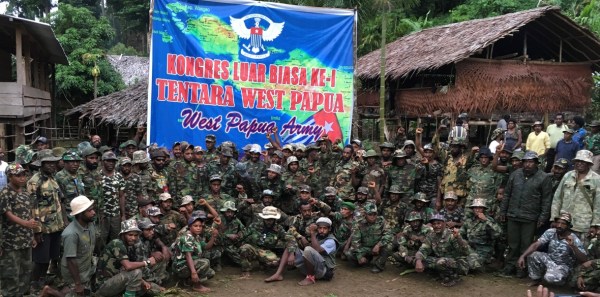
I want to raise a couple of particular episodes. First, at the beginning of last December more than 500 Papuans were arrested after peaceful demonstrations to commemorate the birth of the West Papuan nation in 1961. Days later West Papua Liberation Army militants attacked and killed 20 construction workers in the Nduga region. Some 300 villagers had to flee to escape the subsequent military sweep following the attack.
The British Government have slightly more power than the hon. Member for Witney suggested, because the UK is currently the penholder in the UN Security Council for the protection of civilians in armed conflict. Innocent West Papuans are clearly not getting the protection they so badly need. They are being treated as legitimate targets by the Indonesian military. I would be grateful if the Minister would explain what his Department is doing about that.
In a letter to me the Minister described that incident as “proportionate”. Would my hon. Friend describe the actions of the Indonesian army as proportionate or disproportionate?
They are most clearly disproportionate.
I want to talk about the use of white phosphorous. I believe that white phosphorous was used inappropriately, because I had meetings with Octovianus Mote, the deputy chairman and former general secretary of the United Liberation Movement for West Papua, who had direct testimony from people in the area, and with Ian Martin, the former head of the UN mission, which conducted the self-determination referendum in East Timor.
We need to be really specific about this matter: white phosphorous is not banned under the chemical weapons convention, but its military use is circumscribed by protocol III of the UN convention on certain conventional weapons. However, it is prohibited in all circumstances to use it against civilians. It is also prohibited to make any military objective located within a concentration of civilians the object of attack by air-delivered incendiary weapons, which is what happened on this occasion. I entirely support those calls to send in experts from the UN and the OPCW, to look at what happened. I heard stories of old people being burned out of their homes.
Furthermore, I would like the Minister to suggest to the Indonesian military—it seems to be out of control in West Papua—that peacekeeping duties be assigned instead to the local police. As well as the UN-led investigation into white phosphorus, we need to see the release of political prisoners and the recognition of local political parties, to facilitate the development of a political and civil society in West Papua. I hope that the Government will review any sales of military equipment to Indonesia.
5.18 pm
It is always a pleasure to serve under your chairmanship, Mr Hollobone. I am grateful to my hon. Friend the Member for Witney (Robert Courts) for securing this important debate. I am also grateful for the insights and contributions of the hon. Members for Leeds North West (Alex Sobel) and for Strangford (Jim Shannon), and for the Front-Bench contributions. I will endeavour to answer all the questions, and I will respond in writing to those that I do not answer now.
This year marks the 70th anniversary of diplomatic relations between the UK and Indonesia. I am very pleased to say that the relationship is flourishing. Indonesia is an important democratic partner in the G20 and, for the next two years, on the UN Security Council. In that context, we follow the situation in Papua very seriously. We welcome President Joko Widodo’s commitment to a peaceful and prosperous Papua, but we recognise that the historical challenges are significant. Many of those challenges stem from the disputes over resources and governance, referred to by my hon. Friend the Member for Witney, and from unresolved human rights grievances.
Although the UK Government wholeheartedly respect the territorial integrity of Indonesia, with the province of Papua and West Papua as integral parts, it is important, within that framework, that the authorities address the needs and aspirations of the Papuan people.
We are concerned by the sporadic outbreaks of violence in Papua, and by reports of alleged human rights violations by the security forces. We will continue to press the Indonesian authorities to strengthen their human rights protections and to address the legitimate concerns of the people, including by ensuring that they benefit from sustainable and equitable development, and of the hon. Member for Bishop Auckland (Helen Goodman) in relation to the building of a civic society that allows free political parties.
There are serious and long-standing concerns about the influence and actions of the Indonesian security forces in Papua. The Foreign and Commonwealth Office and I believe that it is regrettable that, despite improvements since the restoration of democracy in Indonesia in 1998, there remains persistent reporting of worrying human rights violations in Papua. Meanwhile, there has been no real accountability for the serious abuses of the past.
When I met the Indonesian ambassador to London in January, I raised those issues with him, not least because I had recently met with the all-party group, and in the light of the contemporary violence in Nduga, where armed groups had attacked construction workers, resulting in the deaths of 19 people. We urged the Indonesian authorities then to ensure that any security response is proportionate. As has been rightly and universally recognised, however, under successive democratically elected Governments there has been a noticeable improvement in the overall human rights situation across Indonesia and an end to the debilitating conflicts in East Timor, Aceh, Ambon and elsewhere.
During their recent phone call, the UK Prime Minister praised the President of Indonesia for the peaceful conduct of the presidential and legislative elections in April, which represented the single largest one-day democratic event anywhere in the world, with an 80% voter turnout and more than 800,000 polling stations operating across the archipelago. Although there were some localised delays to polling, including in Papua, there has been no evidence to suggest that it was anything other than a well-run and credible election. Nevertheless, we will continue to raise our concerns about issues such as the freedom of expression and assembly and the rights of persons belonging to minorities.
In reference to media freedom in Papua, which was raised by several hon. Members, UK officials regularly raise the importance of media access to Papua with the Indonesian Government, and they will continue to do so. Our embassy in Jakarta is active in promoting press freedom across the entirety of Indonesia, where there is already a vibrant media environment. To mark World Press Freedom Day last week, the embassy arranged a full programme of activities to celebrate the work of Indonesia’s journalists, media organisations and regulators in that regard.
Although President Jokowi has said that foreign journalists should be allowed to access Papua without pre-conditions, unfortunately we understand that Indonesian officials continue to place substantial practical obstacles in the way of that taking place. Transparency and media access are important to give us a fuller picture of the situation. We also encourage all Indonesian journalists to write openly and frankly about Papua to ensure that local perspectives are properly heard and are part of the debate.
My hon. Friend the Member for Witney made a point about the panel to defend media freedoms, which has not yet had its first meeting, as I understand. It will be for its members to determine its work and to plan its initial areas of focus. It would not be appropriate for the UK Government to seek to dictate them, because in many ways that would undermine the important sense of its independence.
We regularly press for the release of political prisoners across Papua. Under President Jokowi, the number has fallen from 37 in 2014 to fewer than 10 today. Amnesty International and Human Rights Watch have acknowledged that positive trend, but we continue to make the case that 10 political prisoners remains 10 too many. Moreover, we are concerned that three people were charged with treason in January after apparently taking part in a peaceful prayer event. We call, here and now, for all political prisoners to be released immediately, and for the Indonesian authorities to ensure that all detainees are given the right to a fair trial.
We will continue to request updates on the historical human rights cases in Papua that President Jokowi has committed to resolve. We will keep the pressure up in the aftermath of the elections. Initial investigations have been conducted by the National Commission on Human Rights, but they need to be properly dealt with by the Attorney General’s office.
On phosphorus, I am happy to have further conversations with the hon. Members for Bishop Auckland and for Leeds North West about the issue, but our investigations have not substantiated the media claims that it was used in violation of the chemical weapons convention—as was rightly pointed out, it is prohibited in all cases against civilians. Therefore, we do not believe that there is a case for referral to the Organisation for the Prohibition of Chemical Weapons, but I am more than happy to look at any additional written or other evidence that the hon. Gentleman has. Clearly, we would then be happy to take the matter up.
As has been pointed out, President Jokowi has visited Papua 10 times during his first term, which is far more than any previous Indonesian President. He has made a number of important democratic commitments, including to establish a constructive political dialogue with Papuan groups. That process represents a credible opportunity to address long-held grievances, and in our discussions with the Indonesian Government we will urge them to deliver on those commitments. I very much hope that the recent sad but peaceful passing of Pastor Neles Tebay, the Papuan priest who has been at the forefront of attempts to create a peaceful dialogue on the future of Papua, might inspire progress to honour his legacy, led by the team that the President has appointed to foster a dialogue.
I agree that the Act of Free Choice was an utterly flawed process, but I have to say to my hon. Friend the Member for Witney, and to the Chamber, that there is no desire in the international community for reopening the question. The UK, along with other members of the UN, supports Indonesia’s territorial integrity.
We will continue to support efforts by the United Nations High Commissioner for Human Rights and her officials to arrange the visit to Papua, at the invitation of the Indonesian Government. Officials in our embassy in Jakarta have discussed the proposed visit with the Ministry of Foreign Affairs, and have encouraged Indonesia to agree dates as soon as possible. I also undertake to raise the proposed visit with my Indonesian counterparts. I hope to make a substantially long visit to Indonesia later in the year.
Facilitating a visit to Papua would help the Indonesian Government to demonstrate their commitment to the rights and freedoms of those residing there. It would also help to underline the seriousness with which they take their candidacy for a seat on the Human Rights Council. Being a member of the UN Security Council also provides us with an opportunity to speak fairly openly in New York on the issue.
It is clear that economic factors are a major source of grievance among the Papuan people, and a source of strain in their relationship with the central Government and local authorities. That is why we will continue to support Indonesia’s regional governments to develop a green economy in which people can make a living without over-exploiting their natural resources, and in which there is greater regulatory oversight of the timber industry, which has been fundamentally linked to the social conflict.
I end by saying that the Government will continue to take a close interest in human rights in Papua. I am pleased that a number of MPs are passionate about that. I enjoy their passion and it provides us with the opportunity to make a serious case to our Indonesian counterparts, which we will do. Above all, that expression of interest is in the interests of all the people of Papua and the rest of Indonesia.
5.28 pm
I thank the Minister for his full and comprehensive response, and every hon. Member for taking part. Once again, I welcome Benny Wenda and my constituent Richard Samuelson to the Public Gallery. I thank them for having initiated the debate and I hope that they think it has advanced the cause of human rights in West Papua.
I am grateful to all hon. Members for their points. I thank the hon. Member for Leeds North West (Alex Sobel) for what I will summarise as his robust response to the Foreign and Commonwealth Office; the hon. Member for Strangford (Jim Shannon) for his point about access to justice; the hon. Member for North East Fife (Stephen Gethins) for underlining my points about the visit of the UN High Commissioner for Human Rights and press freedom; and the hon. Member for Bishop Auckland (Helen Goodman) for making the point about political prisoners.
I assure the Minister that I have heard everything he has said and I am glad that the FCO regularly raises the issue of press freedom. I underline the point that the Act of Free Choice lies at the heart of the real repression and the feeling of ill-justice, which are central to the cause. In the 70th year of diplomatic relations, I hope that the Minister and the FCO will continue and redouble their efforts, having heard how strongly hon. Members feel. On the panel to defend media freedoms, I understand its independence; I do not ask that the UK Government dictate to it but merely make suggestions.
We have made great strides today. I am grateful to you for having listened to us in detail, Mr Hollobone. We have cast a searching gaze on the human rights situation in West Papua. We must ensure that we do not look away.
Question put and agreed to.
Resolved,
That this House has considered human rights in West Papua.
5.30 pm
Sitting adjourned.



 melanesianews
 West Papua Army
Recent Comments