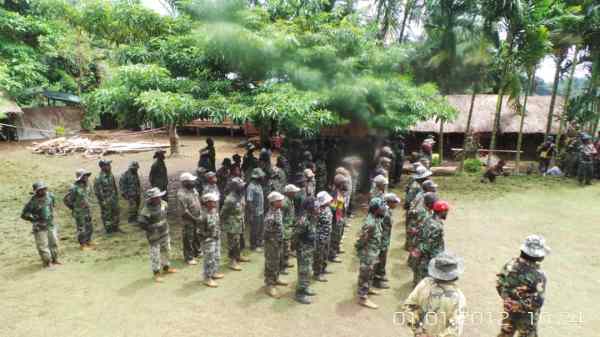
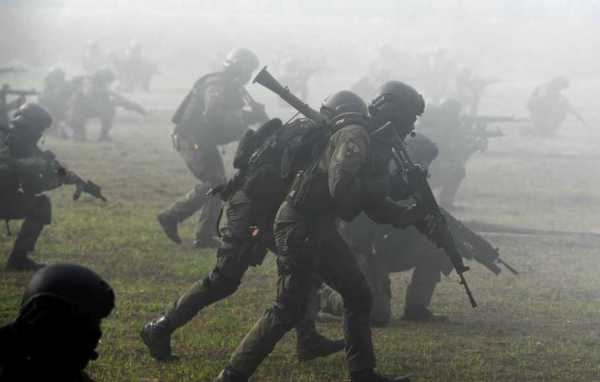
West Papua lida Benny Wenda itoktok long nupla West Papua Army

West Papua independens lida na hetman bilong United Liberation Movement for West Papua (ULMWP), Benny Wenda itokim Radio Australia tede olsem toktok bilong ol independens movemen grups bilong West Papua ikamapim wanpla united West Papua Army.

Em itok dispela em ino bilong yusim violens long pait egensim Indonesia army.

Mr Wenda itok ULMWP istrong yet long yusim diplomatik wei bilong helpim West Papua long kisim independens wantaim sapot bilong ol lidas long Pasifik na world tu.

Em itok ULMWP em imakim ol pipol bilong West Papua na ol narapla lain husat iegensim displa oganaisesen ino bihain tingting bilong olgeta lidas na pipool.

Long displa wik mausman bilong ULMWP, Jacob Rumbiak, itokaut long wanpla media statement olsem olgeta military grup bilong West Papua iwanbel na kam ananit long wanpla komand em ol kolim West Papua Army.

Mr Wenda itok em isapotim displa, tasol em itokaut klia olsem West Papua Army em ino mean olsem ol bai yusim military rot bilong kisim independens.

Tasol Siaman bilong Organisasi Papua Merdeka (OPM) Jeffrey Bomanak itok Mr Wenda na ULMWP ino trutru oganaisesen we ol pipol bilong West Papua ilukave long en.

Em itok ananit long Mama Loa bilong Free Papua muvmen, OPM tasol igat luksave na ino ol narapla grup.

OPM international diplomat, Lewis Prai husat istap long Australia itok tu olsem displa West Papua Army em Mr Wenda na Mr Rumbiak ikamapim long pulim tingting bilong ol lain, na tupla ino bihainim 1 July 1971 Mama Loa na Proclamation bilong Free Papua Movement.

Mr Prai itok em isapotim toktok bilong Mr Bomanak na em ilaikim bai olgeta lidas iken bung wantaim na toktok long stretim displa kain tokpait inoken kamap.

Mr Bomanak itok tu olsem ol OPM paitman isave mekim planti samting egensim ol army bilong Indonesia nau long graun na inogat wanpla samting em ULMWP isave mekim long helpim ol.

Maus man bilong Indonesia military long West Papua, Colonel Muhammad Aidi itok displa toktok bilong ULMWP ikamapim West Papua Army bai nogat strong egensim army bilong Indonesia na em irausim toktok blong Mr Wenda.

Em itok ol OPM isave yusim ol guerrilla stail blong pait na ol inogat ol weapons na pait samting olsem Indonesia igat longen.

Mr Bomanak ibekim olsem sapos Indonesia igat strong, ol ino bin pinisim ol OPM yet. Em itok ol OPM iwok long pait strong yet na bai ol ino inap long lusim inap West Papua ikisim independens long Indonesia.

Source: https://www.abc.net.au/

Bentuk Pasukan Baru, Separatis Sesumbar Bakal Ambil Alih Papua

JAKARTA – Tiga tentara pemberontak Papua Baray telah bergabung di bawah kendali gerakan kemerdekaan yang dipimpin oleh Benny Wenda. Mereka pun sesumbar mengatakan bahwa mereka sekarang siap untuk mengambil alih Papua.

Pernyataan itu dikeluarkan ketika pihak berwenang Indonesia tengah meningkatkan upaya dalam pencarian terhadap lima tentara dan sembilan awak dari helikopter cadangan militer yang hilang pada Jumat pekan lalu.

Papua Barat, yang berbatasan dengan Papua Nugini, telah berada di bawah kendali Indonesia sejak 1969 dan berada dalam cengkeraman konflik separatis yang telah berlangsung lama.

Kelompok-kelompok bersenjata ini pada bulan lalu bersatu di bawah komando Gerakan Pembebasan Bersatu untuk Papua Barat (ULMWP) – organisasi payung untuk tiga kelompok kemerdekaan.

Baca juga: Separatis Papua Bentuk Tentara Baru, Menolak Cap Penjahat oleh Indonesia
“Secara politis dan militer kita bersatu sekarang. Masyarakat internasional sekarang dapat melihat tanpa ragu bahwa kita siap untuk mengambil alih negara kita,” kata Wenda, ketua ULMWP.

“Indonesia tidak dapat lagi menstigmatisasi kami sebagai separatis atau penjahat, kami adalah negara kesatuan militer dan politik yang sah yang sedang menunggu,” imbuhnya seperti dikutip dari The Guardian, Rabu (3/7/2019).

Kelompok-kelompok itu termasuk TPNPB, yang menyerang sebuah situs konstruksi pada bulan Desember lalu dan dilaporkan membunuh 17 orang.

Insiden itu memicu aksi militer di wilayah itu, merenggut puluhan nyawa di kedua sisi.

Tak lama setelah serangan itu, Wenda memberi tahu Guardian bahwa dia tidak bisa menghentikan TPNPB, tetapi menyerukan agar tenang.

Bobby Anderson, peneliti Papua dan mahasiswa doktoral di Sekolah Kebijakan Publik Universitas Chiang Mai, memperingatkan bahwa kelompok pemberontak sebelumnya mengumumkan penyatuan yang tidak ada artinya.

“Pernyataan komando bersatu ini mungkin hanya ULMWP yang mencoba mengambil momentum dari tindakan Nduga,” kata Anderson.

“Kami tidak akan tahu apakah itu nyata sampai kami melihat aksi bersenjata terkoordinasi baik di Nduga dan di luar, yang akan menunjukkan bahwa deklarasi ULMWP adalah kenyataan,” imbuhnya.

“Saya pribadi punya keraguan. Faksi-faksi (separatis bersenjata) ini dipenuhi dengan ‘para jenderal’ yang cenderung tidak menerima perintah. Mereka beroperasi dalam perintah terbatas di area diskrit,” imbuhnya.

Namun Anderson mengatakan memiliki kepemimpinan Wenda mungkin membuat perbedaan, dan perintah terpadu yang belum pernah terjadi sebelumnya dinilai akan meningkatkan pertumpahan darah.

“Dia berhasil menyatukan ULMWP dari perwakilan sipil dari kelompok-kelompok kemerdekaan Papua yang berbeda dan yang diadakan selama ini sangat mengesankan,” ucapnya.

Penyatuan itu menandai perkembangan baru lain dalam konflik yang telah berlangsung lama, hanya beberapa hari setelah terungkap bahwa anak-anak Papua Barat dilibatkan dalam pertempuran.

West Papua rebels unite to form new army

Armed rebel groups in Indonesia’s West Papua have reportedly united to form a new army under a single command.

A release from the office of the chairman of the United Liberation Movement for West Papua, Benny Wenda, says it’s the first time the three major factions have come under a single arm.

Under the This ‘Vanimo Border Declaration’, the Liberation Movement is taking political leadership of the new grouping, formed today and dubbed the West Papua Army.

Mr Wenda says they are ready to take over Papua and are calling for international and domestic support.

“We welcome any assistance in helping us achieve our liberation. Indonesia cannot stigmatise us as separatists or criminals any more, we are a legitimate unified military and political state-in-waiting,”

he said in a statement.

The new force includes the West Papua Liberation Army, which is fighting a bloody war with state forces in Nduga regency.

Also joining the united front are the West Papuan National Army and the West Papua Revolutionary Army.

Source: https://www.rnz.co.nz

Sayap militer Pembebasan West Papua bersatu dalam West Papua Army (WPA)

Jayapura, Jubi – Konflik dan perpecahan internal di antara Pejuang Gerilya maupun Pemimpin Komando Militer Papua Barat telah terjadi sejak lama. Hal ini dipandang sebagai persoalan utama yang merupakan salah satu hambatan dalam proses perjuangan pembebasan rakyat West

Selama bertahun-tahun itu pula proses rekonsiliasi dan konsolidasi Komando Militer Papua Barat dilakukan. Dalam catatan Jubi, sekitar 13 kali proses rekonsiliasi ini dilakukan, yakni :

  1. Pembentukan Pasukan Sukarelawan Papua (PVK), tahun 1961-1963, di Holandia, West Papua, sebagai Embrio Organisasi Sayap Militer West Papua.
  2. Deklarasi Batalion Kasuari, tanggal 19 April 1964, di Manokwari, Pegunungan Arfak. West Papua.
  3. Deklarasi TPN-OPM. Tanggal 01 Juli 1971, di Tanah Waris, West Papua.
  4. Pertemuan Para Pemimpin Faksi PMK dan Marvik antara Tuan Jacob Pray dan Tuan Zet Rumkorem yang difasilitasi oleh Pemerintah Republik Vanuatu, pada tahun 1985, di Port Fila.
  5. Kongres Tingkat Tinggi TPN.PB, 1998, di Markas Viktoria, Scotyau, Bewani, PNG.
  6. Kongres Tingkat Tinggi TPN.PB, 2004, Markas Besar, Merauke, West Papua.
  7. Kongres Tingkat Tinggi TPN. PB, 2005, di Ilaga West Papua.
  8. Deklarasi Dewan Militer TPN.PB, 2005, di Markas Viktoria, Scotyau, Bewani, PNG.
  9. Kongres Nasional TPN.PB, 2006, di Markas Border, PNG.
  10. Kongres Tingkat Tinggi TPN.PB, 2006, di Markas Tingginamburt, Puncak Jaya, WP.
  11. Kongres Tingkat Tinggi TPN.PB, 2007, di Markas Bring, Grimim Nawa, WP.
  12. Persatuan Sayab Militer West Papua, TRWP, 2012, di Markas Border, PNG.
  13. Kongres Tingkat Tinggi, TNPB, 2016, di Serui, West Papua.

Beberapa kali pula Kongres Militer West Papua telah dilakukan dalam rangkaian rekonsiliasi namun tak tercatat secara resmi.

“Beberapa momentum rekonsiliasi dan konsolidasi internal komando militer tersebut diatas adalah sebuah dinamika adanya perbedaan pandangan atau pendapat tentang struktur kepemimpinan nasional dan strategi operasional komando militer secara umum,” ungkap John Rumbiak, Juru Bicara United Liberation Movement for West Papua (ULMWP) mengenai proses rekonsiliasi dan konsolidasi yang terjadi selama ini.

Menurut Rumbiak, proses ini telah tuntas sejak tiga tahun lalu, tepatnya setelah Deklarasi Saralana, tanggal 27 November – 03 Desember 2017 saat ULMWP melakukan Kongres Tingkat Tinggi (KTT) Pertama, yang dihadiri oleh Para Pemimpin dari semua Komponen Perjuangan Sipil, Diplomasi Politik dan Militer West papua untuk membahas dan memutuskan agenda kerja dan struktur kepemimpinan ULMWP, periode 2018 – 2020.

Dalam Forum KTT tersebut para pemimpin dari Komponen Militer Papua Barat yaitu Tentara Pembebasan Nasional Papua Barat (TPN. PB), Tentara Revolusi West Papua (TRWP), Tentara Nasional Papua Barat (TNPB), mendapat kesempatan waktu untuk menyampaikan beberapa pandangan umum tentang perkembangan perjuangan di dalam negeri, salah satunya menyangkut perpecahan internal Komando Militer yang sedang terjadi.

“Dibutuhkan upaya persatuan kembali secara nasional,” lanjut Rumbiak, mengenai kesimpulan dari pandangan umum tersebut.

Sesuai dengan pandangan politik dari militer tersebut maka, Forum KTT Pertama ULMWP, telah memutuskan untuk mengeluarkan Rekomendasi Tentang Rekonsiliasi dan Konsolidasi Internal Komando Militer Papua Barat, dan kemudian dilanjutkan oleh Ketua Eksekutif ULMWP, yang saat itu baru terpilih (Beny Wenda).

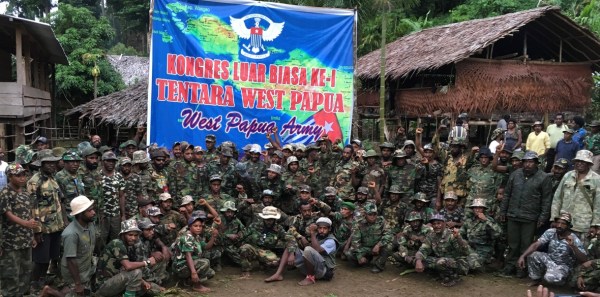
Dikatakan oleh Rumbiak, sesuai dengan keputusan KTT Pertama ULMWP, tahun 2017, kemudian RAKER Eksekutif ULMWP Ke-I tentang struktur kerja eksekutif dan pelimpahan kewenangan kerja Biro Pertahanan dan Keamanan ULMWP, biro ini telah menyelesaikan program kerja prioritas yaitu Rekonsiliasi dan Konsolidasi Internal Militer Papua Barat secara Nasional (Sorong – Merauke) yang kemudian membentuk panitia Kongres Luar Biasa I West Papua Army (WPA). Anggota panitia ini merupakan perwakilan Tentara Pembebasan Nasional Papua Barat (TPNPB), Tentara Revolusi West Papua (TRWP) dan Tentara Nasional Papua Barat (TNPB).

Kongres Luar Biasa ini menghasilkan beberapa keputusan antara lain :

  1. Para Panglima Komando TPNPB, TRWP dan TNPB telah menyepakati, memutuskan dan menyatakan bersatu dalam agenda kerja perjuangan Bangsa West Papua
  2. Para Panglima Komando TPN.PB, TRWP, dan TNPB, telah menyepakati, memutuskan dan menyatakan bersatu dalam satu nama West Papua Army.
  3. Para Panglima Komando TPN.PB, TRWP, dan TNPB, menyepakati, memutuskan dan menyatakan bersatu dalam sat garis kordinasi komando West Papua Army dibawah ULMWP.
  4. Struktur Koordinasi Kerja Komando West Papua Army berbentuk Semi Negara.

“Hasil ini telah dilampirkan untuk diketahui oleh seluruh Komponen Perjuangan Rakyat West Papua, dan Masyarakat Internasional.  Sayap militer West Papua secara resmi dan sah telah menyatakan dukungan penuh kepada ULMWP selaku sayap politik diplomasi. Hal itu terbukti dalam legitimasi tanda tangan dari setiap Panglima Pemegang Komando Militer dari Sorong sampai Merauke,”

ujar Rumbiak.

Mengenai keputusan dalam KLB I WPA ini, ketua ULMWP, Benny Wenda mengatakan WPA telah menyatakan siap membela dan melindungi wilayah beserta masyarakat Sipil West Papua dari kejahatan Indonesia dan sekutunya.

“WPA juga menolak dialog antara Jakarta dan West Papua dan mendukung proses perjuangan diplomasi yang di dorong oleh ULMWP,” ujar Wenda.

WPA juga ikut menjaga perdamaian dunia dari ancaman teroris, perdagangan narkotika dan segala jenis perdagangan illegal dan siap melaksanakan Konvensi Den Haag, Kovensi Jenewa 1949 dan Hukum Humaniter Internasional serta hukum internasional lainya yang berlaku di masa perang dan keadaan damai.  (*)

Source: JUBI

Separatis Papua Bentuk Tentara Baru, Menolak Cap Penjahat oleh Indonesia

Muhaimin, JAKARTA – Gerakan United Liberation for West Papua (ULMWP) atau Serikat Pembebasan Papua Barat yang selama ini dicap pemerintah Indonesia sebagai kelompok separatis telah membentuk tentara baru. Dengan pembentukan tentara baru ini, ULMWP menolak label separatis dan penjahat oleh pemerintah Indonesia.

Pemimpin ULMWP, Benny Wenda, mengatakan untuk pertama kalinya tiga faksi yang selama ini melawan militer Indonesia telah bersatu membentuk pasukan baru di bawah satu komando.

Tentara baru itu diberi nama “West Papua Army (Tentara Papua Barat)”. Tentara baru itu dibentuk di bawah “Deklarasi Perbatasan Vanimo”.

Benny Wenda mengatakan pihaknya siap mengambil alih Papua dan menyerukan dukungan internasional dan domestik.

“Kami menyambut bantuan apa pun dalam membantu kami mencapai pembebasan kami. Indonesia tidak bisa lagi menstigmatisasi kami sebagai separatis atau penjahat, kami adalah negara kesatuan militer dan politik yang sah dalam penantian,” katanya dalam sebuah pernyataan, yang dikutip RNZ, Senin (1/7/2019).

Tiga faksi yang bersatu menjadi “Tentara Papua Barat” ini adalah Tentara Pembebasan Nasional Papua Barat (TPNPB)—yang terlibat konflik berdarah dengan Tentara Nasional Indonesia (TNI) di Nduga—, Tentara Nasional Papua Barat dan Tentara Revolusi Papua Barat.

Sebelumnya, TPNPB blakblakan merekrut anak-anak remaja sebagai tentara untuk melawan militer Indonesia. Kelompok itu menyadari bahwa melibatkan anak-anak dalam konlik bersenjata adalah pelanggaran konvensi internasional, namun mereka mengklaim hal itu diperlukan dengan melihat perkembangan yang terjadi di Papua Barat.

Perekrutan anak-anak itu bahkan dipublikasikan sebagai bahan propaganda. TPNPB merilis foto yang menunjukkan anak-anak remaja mengenakan seragam ala militer dan menenteng senapan.

“Anak-anak ini secara otomatis menjadi pejuang dan penentang militer kolonial Indonesia,” kata Sebby Sambom, juru bicara TNPB.

Dia mengatakan sekitar selusin tentara anak berusia antara 15 dan 18 tahun saat ini berjuang untuk kelompoknya di berbagai daerah di Papua.

Kodam XVII/Cenderawasih telah mengecam tindakan TNPB yang merekrut anak-anak remaja sebagai tentara anak untuk melawan militer Indonesia. Kapendam Cenderawasih Kol Inf Muhammad Aidi Nubic menjelaskan bahwa sejatinya bila ada dua atau lebih pihak yang bertikai, maka semua pihak wajib hukumnya untuk memberikan perlindungan kepada anak-anak, wanita dan orang lanjut usia (lansia).

“Apabila ada pihak yang melibatkan anak-anak, wanita dan lansia dalam pertikaian atau pertempuran, maka pihak tersebut telah melanggar hukum HAM (hak asasi manusia) dan Humaniter. Apalagi mereka merekrut dan mengeksploitasi anak-anak di bawah umur untuk terlibat dalam pertempuran,” katanya dalam pernyataan tertulis yang diterima SINDOnews.com. (mas)

The Sayings of Lao-Tzu, Lionel Giles translation [1905], at sacred-texts.com

Printed in Great Britain by
Hazell, Watson & Viney, Ld., London and Aylesbury
.

CONTENTS

  PAGE
 INTRODUCTION9
I.TAO IN ITS TRANSCENDENTAL ASPECT AND IN ITS PHYSICAL MANIFESTATION19
II.TAO AS A MORAL PRINCIPLE, OR “VIRTUE”24
III.THE DOCTRINE OF INACTION30
IV.LOWLINESS AND HUMILITY33
V.GOVERNMENT37
VI.WAR41
VII.PARADOXES43
VIII.MISCELLANEOUS SAYINGS AND PRECEPTS47
IX.LAO TZŬ ON HIMSELF54

Next: Editorial Note

TPN-OPM Nyatakan Bertanggung Jawab Atas Penembakan di Nduga

Jayapura – Tentara Pembebasan Nasional – Organisasi Papua Merdeka (TPN-OPM) melalui salah satu petinggi organisasi itu, Panglima Daerah Militer Markodap III Ndugama, Egianus Kogeya menyatakan bertanggung jawab terhadap penyerangan pekerja Jembatan Kali Aworak, Kali Yigi, dan Pos TNI di Distrik Mbua, Papua.

Hal ini dikatakan Juru Bicara TPN-OPM Sebby Sambom dalam rilisnya kepada BeritaSatu.com, Rabu (5/12) siang. Sebby Sambom mengatakan, Panglima Daerah Tentara Pembebasan Nasional Papua Barat (TPNPB) Markodap III Ndugama, Egianus Kogeya menyatakan bertanggung jawab terhadap penyerangan pekerja Jembatan Kali Aworak, Kali Yigi, dan Pos TNI Distrik Mbua.

Disebutkan, sejak 2 Desember 2018 di bawah pimpinan Komandan Operasi Tuan Pemne Kogeya, telah dilakukan operasi di Kali Aworak dan Kali Yigi dengan sasaran operasi Jembatan Kali Aworak, Kali Yigi, dan Pos TNI Distrik Mbua.

“Kami yang lakukan dan kami siap bertanggung jawab. Penyerangan ini di bawah pimpinan Panglima Daerah Makodap III Ndugama Tuan Egianus Kogoya dan komandan Operasi, Pemne Kogeya. Lebih dari tiga bulan kami memantau dan melakukan patroli, dan kami sudah secara lengkap mempelajari pekerja di Jembatan Kali Aworak, Kali Yigi, dan Pos TNI Distrik Mbua. Mereka adalah satu kesatuan,” kata Seby yang menyampaikan keterangan Egianus Kogeya.

Diungkapkan, Pos Mbua adalah pos resmi sebagai pos kontrol dan yang bekerja di Kali Aworak dan Kali Yigi adalah murni anggota TNI (Zeni Tempur/Zipur). “Karena kami tahu bahwa yang bekerja selama ini untuk jalan Trans (Papua) dan jembatan-jembatan yang ada sepanjang Jalan Habema Juguru Kenyam Batas Batu adalah murni anggota TNI,” katanya.

Lanjut dia, sasaran serangan mereka tidak salah, sebab TPN-OPM tahu mana pekerja sipil atau tukang biasa, dan mana pekerja anggota TNI. “Walaupun mereka berpakaian sipil atau preman,” katanya.

“Kami juga siap bertanggung jawab terhadap penyerangan Pos TNI di Distrik Mbua. Yang melakukan perlawanan dan penyerangan adalah TPNPB Markodap III Ndugama, bukan warga sipil. Kami pimpinan sampai anggota TPNPB Komando Nasional punya kode etik perang revolusi. Kami tidak akan berperang melawan warga sipil yang tidak seimbang dan sepadan,” kata Sebby Sambom.

Sumber: Suara Pembaruan

Will Indonesia break up?

Indonesians in the resource-rich outer regions no longer accept the heavy hand of Jakarta

Anne Booth

Edition 59: Jul-Sep 1999
Published: Sep 11, 2007

On 17 August 1998, the leading news magazine Forum Keadilan devoted its National Day edition to a discussion of national unity. According to a poll it conducted, over 90 per cent of respondents were worried about the danger of the country falling apart, over 80 per cent thought the emergence of political parties based on ethnicity and religion would increase the dangers of disintegration, and over 85 per cent thought the control of the economy by minorities increased these dangers.

The fact that a widely read magazine could openly conduct a poll about such a sensitive issue, and publish the results, indicated the extent to which press freedom had blossomed in the three months since Suharto’s resignation. But the results of the poll could hardly have been gratifying to the new government of President Habibie. They were a clear indication of the extent of concern among middle class Indonesians about the fragility of their country.

In addition the poll reflected a widespread conviction that the regions must be given greater political and financial autonomy. In effect, the message of the poll seemed to be that the resource-rich regions would have to be permitted to keep a much higher proportion of the profits from resource exploitation. At the same time the electorate would have to have the power to vote in, and vote out, key provincial and local officials such as governors, regents, and mayors.

In the latter part of 1998 and early 1999 there were many manifestations of regional unrest. Some were violent and tragic, such as the events in Ambon and West Kalimantan. Some, such as student demonstrations in Caltex facilities in Riau, obviously intended to make a political point to both the national and the international media. The Habibie government’s apparent promise, made at the end of January, of self-determination for the troubled province of East Timor, immediately provoked predictions of a domino effect in other parts of the archipelago, from Aceh to Irian Jaya.

By the end of April, press reports suggested there was a strong military backlash against any promise of ultimate independence for Timor, based in large part on the conviction that, once the Pandora’s Box had been opened, several other provinces would want to escape as well. Increasingly, newspaper pundits in various parts of the world began to talk about ‘another Yugoslavia’ in Southeast Asia. To many, the world’s fourth most populous country appeared to be unravelling in much the same way as the former USSR in the early 1990s.

To a number of observers of the Indonesian scene (myself included) it had seemed obvious for some years that the highly centralised system of government which Suharto and his key advisers had put in place in the 1970s was, by the 1990s, both politically unacceptable and, from an economic viewpoint, inefficient and inequitable. (My own views were expressed in a lecture I gave at SOAS in 1992: ‘Can Indonesia survive as a unitary state?’, Indonesia Circle no.58, June 1992.)

Oil

In the early 1970s, the establishment of firm central government control over revenues from natural resources (mainly of course oil) had seemed essential if the government was to provide infrastructure and improve the quality of life for populations in all parts of the country. After all, much of the oil was in fact located in two rather small and isolated provinces, both of which seemed to lack any strong sense of regional identity. Given the development needs in other parts of the country, it would have been very difficult to make a case in the 1970s for handing over a significant part of the oil revenues to either Riau or East Kalimantan.

When huge gas reserves were located in Aceh, a province which did have a long tradition of rebellion against outside control, some observers predicted that there could be trouble, although I cannot recall anyone in the 1970s forecasting the tragic events of the latter part of the 1980s and early 1990s in that province.

But as rapid economic growth and industrialisation transformed both the urban and the rural landscape in Indonesia, and especially in Java, over the 1980s and early 1990s, the whole nature of the ‘regional problem’ in Indonesia changed. In the 1970s the central government could claim to be playing the role of a benevolent Robin Hood, robbing the rich few to pay for improved living standards for the poor millions, especially but not exclusively in Java. But by the mid-1990s, it was clear that the incidence of poverty in Java was in fact lower than in a number of provinces outside Java, including some such as Irian Jaya with abundant mineral wealth.

Even in those provinces such as East Kalimantan and Aceh where poverty was lower than the national average, there was growing resentment at the differences in living standards between the local populations and those of neighbouring Malaysia. Per capita GDP in East Kalimantan in 1993 was about the same as in the neighbouring Malaysian state of Sarawak, and higher than in Sabah, but poverty incidence was much higher in East Kalimantan. Given the porous nature of the land borders and the widespread movement of labour from Indonesian Kalimantan into East Malaysia by the early 1990s, it was inevitable that local populations would make comparisons between their own living standards and those in adjacent regions of the neighbouring country.

In addition, by the early 1990s, the combination of rapid economic growth and over two decades of administrative centralisation had produced a situation where government ministries in Jakarta were handling huge budgets for both routine administration and development projects in all parts of the far-flung archipelago. Given the absence of effective audit procedures, and the demonstration effect of growing nepotism in the first family, there was inevitably a sharp increase in the magnitude of official corruption throughout the central government apparatus. Even those government ministries and agencies which had been considered ‘clean’ in the 1970s became increasingly blatant in the way they creamed off funds for the personal use of senior staff, including lavish housing and cars, foreign travel and foreign education for their children. Regional and local government officials often followed suit.

That there is now, with greater freedom in both the print and the electronic media, an explosion of public outrage against such manifestations of bureaucratic abuse is hardly surprising. The Habibie government has not been slow to sense the public mood. On April 23, the parliament (the same body which slavishly approved the centralist policies of President Suharto) passed a new law on inter-governmental fiscal relations which allows for a considerable amount of revenue-sharing between centre and province, especially for revenues from oil, gas, other mining, forestry and fisheries. The issues are complex and it is, as yet, far from clear how the law will operate in practice (see John McBeth in Far Eastern Economic Review, May 13, 1999). It is also possible that the new parliament, to be elected in June, will press for even more sweeping changes.

Breakup?

There seems to be little doubt that what James Mackie once termed the ‘powerful centralising and integrating forces’ of the New Order era have been halted and indeed thrown into reverse. But how far will the reverse process proceed, and will it inevitably lead to the breakup of Indonesia?

On this question, I can only give a personal view, based on my own observations over nearly three decades of study. It does seem to me that, after more than fifty years of independence from Dutch colonialism, most inhabitants of this vast archipelago do wish to be part of some entity called Indonesia. Understandable demands for greater autonomy from a corrupt and predatory central government apparatus should not be confused with a desire for outright independence. Indeed it was the repeated failure of both Suharto and the armed forces to comprehend this distinction which led to so many human rights abuses in places like Aceh and Irian Jaya.

While the East Timor problem may only be resolved ultimately by independence, it ought still to be possible for other regions to remain within the Indonesian state, but with different conditions of membership from those which were laid down in the Suharto era. New conditions of membership in effect mean constitutional change. Accommodating growing demands for such change while at the same time trying to restore confidence in both the economic and the administrative system will severely test the skills of whatever government assumes control in Indonesia in the post-Suharto era.

But one thing is clear: Suharto’s New Order has gone, and with it the highly centralised political and economic system which he fashioned. There will be a very powerful group of losers from the changes now in progress in the central bureaucracy (both civilian and military), and especially in its upper echelons.

The logic of the decentralisation measures introduced in April will be that provincial and local governments will assume more direct responsibility for sectors such as health, education, family planning, women’s affairs and environmental protection. Much economic and social planning will have to be done in the regions rather than at the centre. Many officials will thus have to move to the regions or find alternative employment.

To the extent that they will be forced to leave central departments, they will also be cut off from the extensive patronage networks which developed at the centre; indeed these networks will themselves wither as they are deprived of resources. Senior bureaucrats were among the most privileged people in Suharto’s New Order and they can hardly be happy about the inevitable attenuation of their power which a genuine process of decentralisation will entail. What, if anything, they can do about the situation remains to be seen.

Professor Anne Booth teaches at the School of Oriental and African Studies (SOAS), University of London. She has written numerous books and articles on the Indonesian economy.
Inside Indonesia 59: Jul-Sep 1999

UN Resolution 448 (V) – 3 November 1948: Development of Government in Non-Self Government Territories

947th plenary meeting,
14 December 1960

The General Assembly

Considering that resolution 222 (111) adopted by the General Assembly on 3 November 1948, while welcoming any development of self-government in
Non-Self-Governing Territories , considers that it is essential that the United Nations be informed of any change in the constitutional position and status of any such Territory as a result of which the responsible government concerned thinks it unnecessary to transmit information in respect of that Territory under Article 73e of the Charter,

Noting the communication dated 29 June 1950 from the Government of the Netherlands in which it is stated that the Netherlands will no longer present a report pursuant to

Article 73 e on Indonesia with the exception of West New Guinea,(West Papua)

Noting that the full independence of the Republic of Indonesia has been followed by the admission of that State to membership in the United Nations,

  • Takes note with satisfaction of the communication of the Government of the Netherlands with reference to the cessation of the transmission of information on Indonesia :
  • 2. Request the Special Committee on information transmitted under Article such information as nay be transmitted in future to the Secretary-General in pursuance of General Assembly resolution 222 (111) and to report thereon to the General Assembly. 320th plenary meeting
  • 12 December 1950

Blog at WordPress.com.

Up ↑

Design a site like this with WordPress.com
Get started